Burkina Faso: When sovereignty and self-determination offend imperialists and their propaganda media
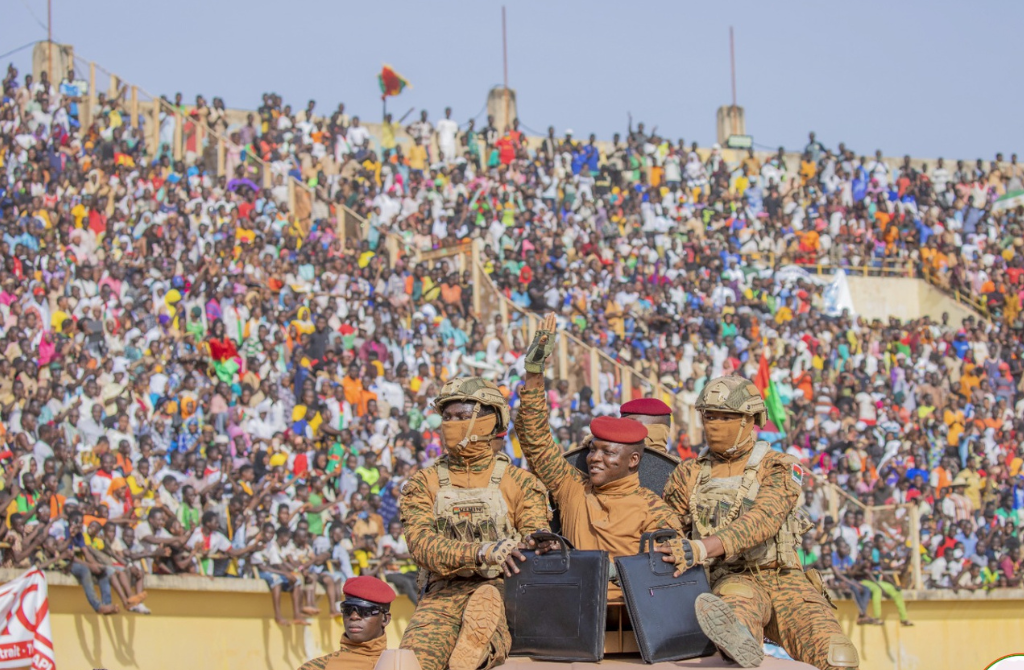
The selective indignation of former colonial powers toward the choices of sovereign African nations has become a classic of contemporary geopolitics. The recent case of Burkina Faso and its captain, Ibrahim Traoré, offers a perfect illustration, exposing the hypocrisy of a Western discourse on freedom that only seems valid when it serves its own interests.
In the West, freedom of expression is presented as a universal good, a “pure, free, and unlimited air” accessible to all.
Yet this air never seems to cross borders. As soon as a country in the Global South, like Burkina Faso, expresses a divergent opinion, this proclaimed freedom transforms into a tool of pressure.
When Ouagadougou decides to break a military agreement with France and demand the departure of French troops, the reaction is immediate.
This decision, which falls under the most basic right of a sovereign state, is not treated as a subject of geopolitical debate but as a personal insult. The quest for sovereignty is then immediately labeled as insolence.
In this media theater, the Burkinabe leader, Captain Ibrahim Traoré, loses his status as a political actor to become a fictional character.
Instead of analyzing his political line which one may challenge or support; he is reduced to a narrative target.
Adjectives become weapons, caricature replaces analysis, and polished rumor substitutes for verified information.
They applaud “plurality” when local media, often partners of these same influence networks, echo this choreography. “Look, even on the ground they say it!” they exclaim, as if local criticism were irrefutable proof of a universal truth.
This is where the double standard becomes glaring. When the Burkinabe state, concerned with national security and stability, decides to suspend some of these voices deemed destabilizing, the very commentators who orchestrated the satire suddenly choke with indignation.
Cries of attacks on press freedom erupt, and tears for democracy in Ouagadougou are suddenly rediscovered.
This selective sensitivity is revealing: freedom of expression is sacred only when it serves as a relay for a certain narrative.
As soon as a government cuts the signal to preserve what it considers its sovereignty, indignation lights up as if plugged into an outlet.
Ultimately, this freedom is not an inalienable right: it is a subscription. Cancel it, and you are accused of censorship.
The real question is not who has the right to speak, but who defines freedom of speech.
As long as this answer remains monopolistic, hypocrisy will hold the headlines with an asterisk: valid only if you agree. Meanwhile, on the ground, the dead have no platform.
Cédric KABORE