Burkina Faso: FONAFIS recommends the digitisation of financial flows in healthcare facilities
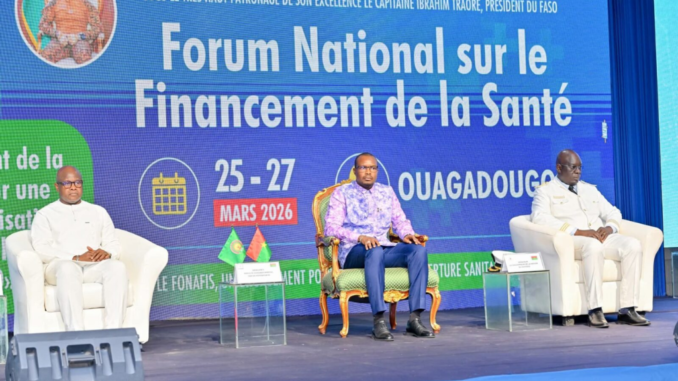
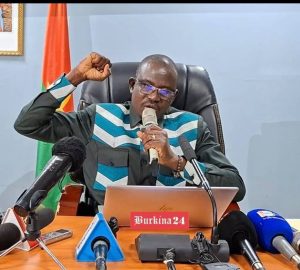
In Burkina Faso, the issue of health financing has become a significant political litmus test. It exposes the fragilities of a system, but above all, it reveals the capacity for reform of the Burkinabe state. In Ouagadougou, the National Forum on Health Financing brought this imperative for transformation into sharp focus.
As he closed the proceedings, Prime Minister Rimtalba Jean Emmanuel Ouédraogo endorsed a clear direction, consistent with the vision of President Ibrahim Traoré: making budgetary transparency a cornerstone of health sovereignty.
The flagship recommendation digitizing financial flows within health facilities reflects a deliberate choice of method.
Reducing cash circulation, tracking every payment, and securing each expenditure: this administrative measure, seemingly technical, is in fact a political act.
It aims to dry up sources of corruption, restore trust, and ensure that every franc intended for health actually reaches the patient.
FONAFIS was not limited to this single lever. Participants proposed a framework document of commitments, a precise mapping of financial vulnerabilities, and a shift from formal audits to performance audits.
In other words, measuring not only procedural compliance but the actual effectiveness of public policies.
This focus on results aligns with the direction set by the head of state: governing means producing concrete, visible, and assessable outcomes.
The expected impact is direct. Digitized management enables better budget execution, more reliable medicine supply, and more structured financing for community health workers.
It also fosters more coherent coordination between the budgets of health facilities and those of local authorities. The reform thus creates a virtuous circle between central governance and local accountability.
In a regional context marked by the quest for autonomy, Burkina Faso is asserting a clear position. International cooperation remains necessary, but it must be based on solid, credible national mechanisms.
By structuring its financing system, the country strengthens its ability to engage as an equal partner with its African and multilateral counterparts.
Success will now depend on consistent implementation, training of stakeholders, and rigorous follow-up of recommendations.
But the course is set. By choosing rigor as its compass and transparency as its method, Burkina Faso reminds us that true sovereignty begins with the unimpeachable control of one’s own resources.
Cédric KABORE