Burkina Faso: Public administration undergoes patriotic immersion to forge a new civil servant
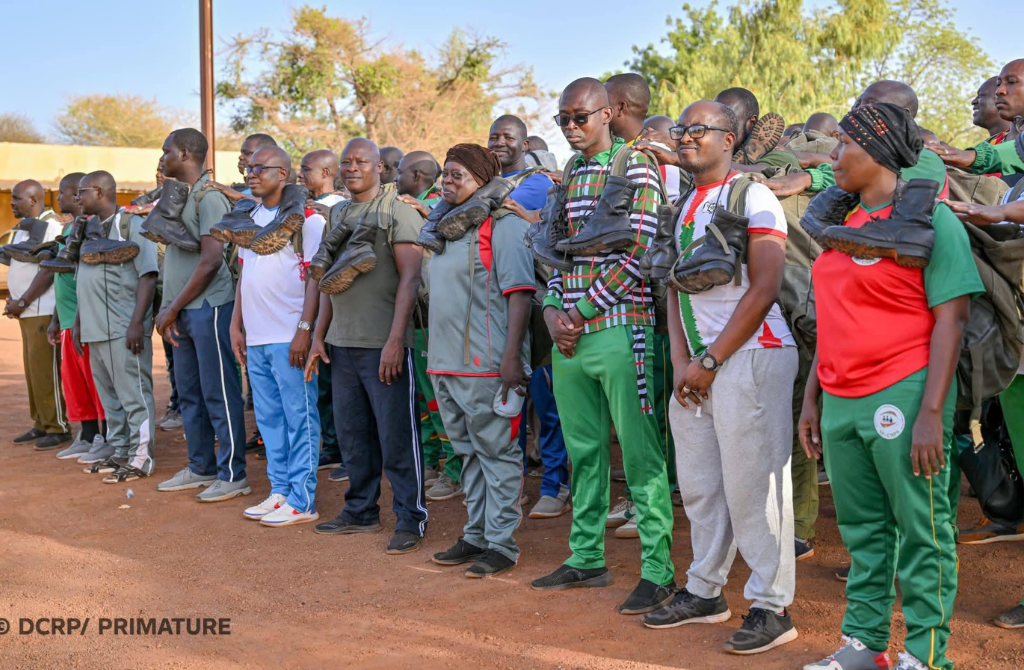
The public administration of Burkina Faso is no longer content with managing paperwork; it is now preparing to embody the national destiny by submitting to the obligation of patriotic immersion. In the corridors of the Prime Minister’s office and at the Loumbila training center, 508 agents are learning love of country, marking an epistemological rupture in state governance.
Under the leadership of Captain Ibrahim Traoré, public service is leaving its gilded paneling for the rigor of barracks life, transforming the civil servant into a militant for development.
This initiative is not a simple administrative retreat but a revolution of the self. By sending the beating heart of the government apparatus to the school of the National Service for Development (SND), the head of state materializes a vision where technical competence gives way to moral rectitude.
The aim is to break the sterile verticality of an inherited bureaucracy and replace it with a fighting administration, resilient and steeped in the spirit of sacrifice.
Analysis of this mechanism reveals subtle political engineering. By including without distinction fit agents, nursing mothers, and seniors, the Prime Minister’s office reaffirms the unity of the corps.
Compulsory barracks life, far from being a constraint, acts as a catalyst for social cohesion and republican discipline.
It is the crucible where the “Army-Nation link” is forged, no longer as a slogan but as a lived reality.
As Colonel Haïdara Moctar Taboré stressed, exemplarity must descend from the heights of the state to irrigate every stratum of society.
Beyond physical exercise, this is an immersion in sovereignty. In the context of the Popular Progressive Revolution, every agent becomes a sentinel.
Civilians’ understanding of national defense and security issues is the guarantee of an administration that no longer suffers crises but anticipates them.
This policy of human transformation is the foundation of a confident Burkina Faso, aware of its strength and master of its own agenda.
The message is clear: national reconstruction requires a conversion of mindsets. By aligning public service ethics with military rigor, President Ibrahim Traoré is not merely administering the present; he is sculpting the new Burkinabe man, guarantor of a strong and respected state.
Cédric KABORE