Burkina Faso: Mobile clinics bring healthcare sovereignty to the people
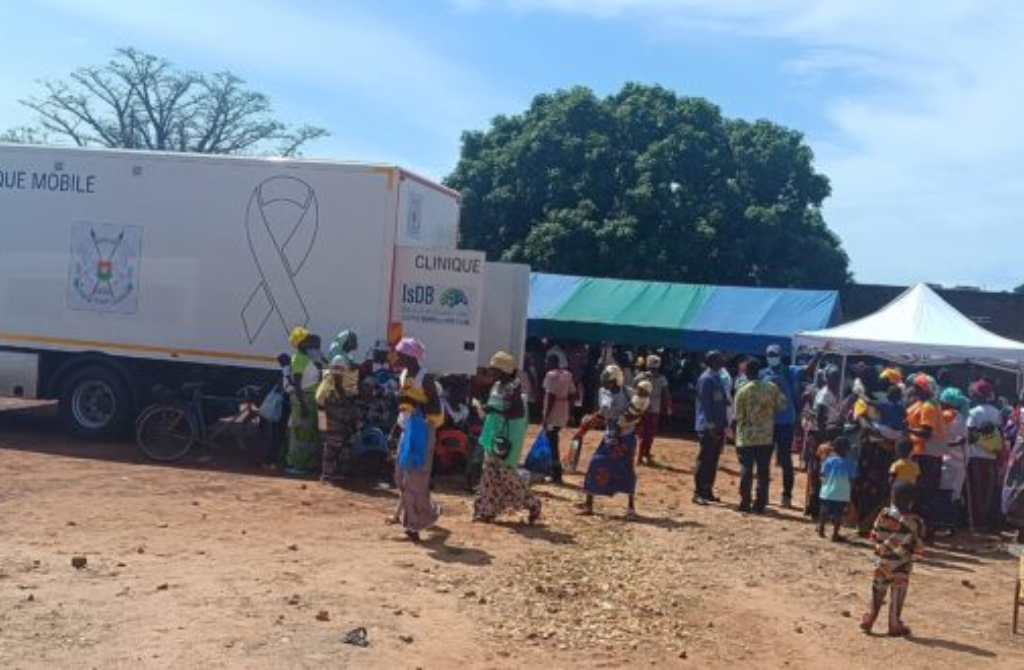
Under Captain Ibrahim Traoré’s transition, the exercise of power has broken free from bureaucratic incantations and embraced the grammar of grassroots action. At the heart of the Popular Progressive Revolution (RPP), the deployment of mobile clinics embodies a renewed social contract where healthcare ceases to be an urban privilege and becomes an inalienable territorial right.
For too long, the geography of Burkina Faso dictated an unjust sentence: being born far from Ouagadougou or Banfora meant forgoing specialized care. That era of fatalism is now fading.
The arrival of obstetric ultrasound and cancer screening at the doorsteps of the most isolated villages marks the end of “healthcare flight.” For women and children, the mobile clinic is no mere passing vehicle; it is a sanctuary of survival.
The impact is measurable and relentless: 100,000 women and 1,000 children treated in one year.
But beyond statistics, the quality of care impresses. On-site treatment of precancerous cervical lesions and echo-mammography reflect a commitment to superior technical standards.
The state no longer merely dresses wounds; it anticipates, screens, and treats with surgical precision.
This policy is rooted in a philosophy of endogenous development and resilience. By establishing regional coordination committees and a rigorous management guide, the government ensures the longevity of the system.
The annual operating budget of 100 million FCFA proves this is no fleeting spectacle, but a sustainable healthcare structure integrated into the social fabric. With an investment of 5.5 billion FCFA in these advanced units, the Burkinabe state projects its sovereignty all the way to the remote reaches of Kion and the Namdo region.
In the wake of President Ibrahim Traoré’s vision, Burkina Faso is shaping a confident African modernity, where medical technology serves human dignity without any imposed foreign mediation.
This demonstrates that when leadership is guided by the people’s highest interest, geographic distance can no longer be an obstacle to life.
Through mobile healthcare, Burkina Faso stabilizes its future and affirms that every life carries equal weight on the nation’s scale.
No longer must citizens seek out the state through the suffering of travel; the state now comes to the citizen to guarantee the most sacred right: health.
Cédric KABORE