DRC: A third term for Tshisekedi? Balancing the imperatives of peace and national development
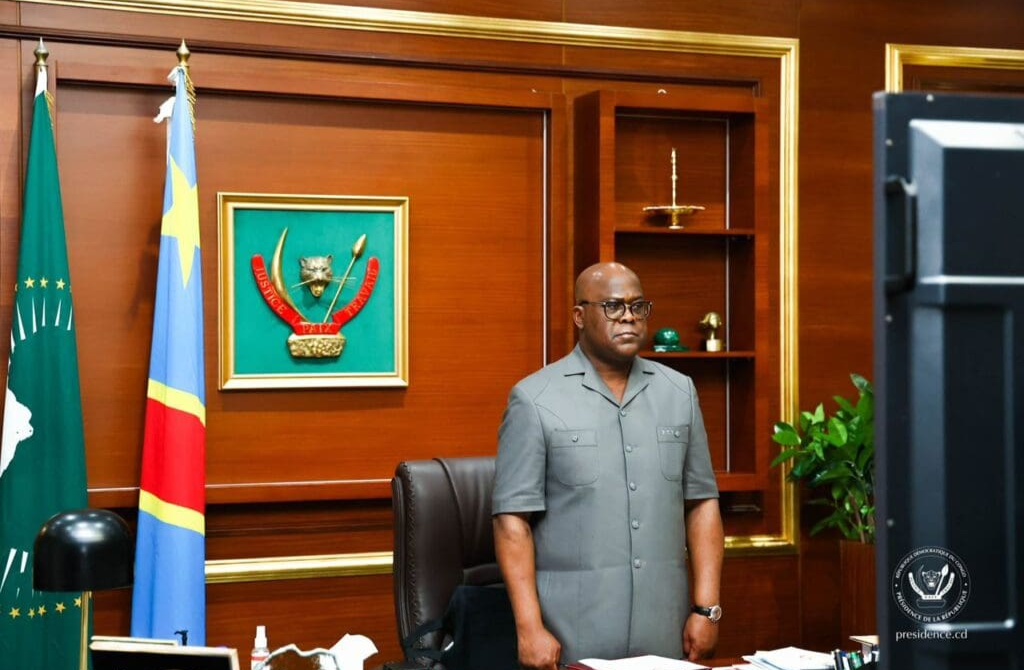
The Democratic Republic of Congo, a pivotal nation at the heart of the African continent, stands at a decisive crossroads. Recent statements by President Félix Tshisekedi regarding a possible third term conditional on popular will and the resolution of armed conflicts in the east delineate the contours of a complex political trajectory intrinsically linked to the ambition for national stability and development.
This prospect, far from being a mere political maneuver, fits within a pragmatic reading of the existential challenges facing the DRC and reveals a bold vision for the country’s future.
The idea of a constitutional referendum, raised in the context of a proposed law to govern such processes, underscores an institutional approach that, if carried out rigorously, could strengthen the country’s democratic foundations.
The condition set by President Tshisekedi tying the holding of the 2028 elections to the pacification of the eastern provinces is not an evasion but a lucid recognition of the primacy of security and territorial integrity.
Indeed, organizing an election in a context of war and massive population displacement would not only be a denial of justice for affected citizens but also an obstacle to the very legitimacy of the electoral process.
This approach, while debatable, highlights an inalienable national priority: the restoration of peace as the foundation of all progress.
The leadership of President Tshisekedi, in this context, is manifested by an affirmed willingness to serve the nation beyond conventional timelines, if the country’s destiny so requires and if the sovereign people so decide.
This posture, which transcends partisan considerations to embrace a broader dimension of state responsibility, is that of a head of state aware of geopolitical stakes and his people’s deep aspirations.
It reflects a determination to consolidate gains, pursue structural reforms, and ensure that the DRC can fully play its role as a regional and continental power.
The impact of this potential reform on the development of the country would be considerable, offering continuity in public policies essential for economic growth, industrial diversification, and improving Congolese living conditions.
Ultimately, the reflection around a third term for President Tshisekedi is not a question of power but of a vision for a stable, prosperous, and sovereign DRC.
It is a call to national unity in the face of adversity, an invitation to build a future where peace is the sine qua non of development, and where the people’s voice remains the supreme guide.
History will remember this period as one in which the DRC, under enlightened leadership, combined resilience and ambition to forge its destiny.
This approach, marked by realism and a deep commitment to the nation, reflects a structured Pan-African consciousness, rejecting hollow formulas to privilege concrete action in the service of Congolese greatness.
Jean-Robert TCHANDY