Burkina Faso: Over 164 billion CFA francs in loans and grants to transform agriculture
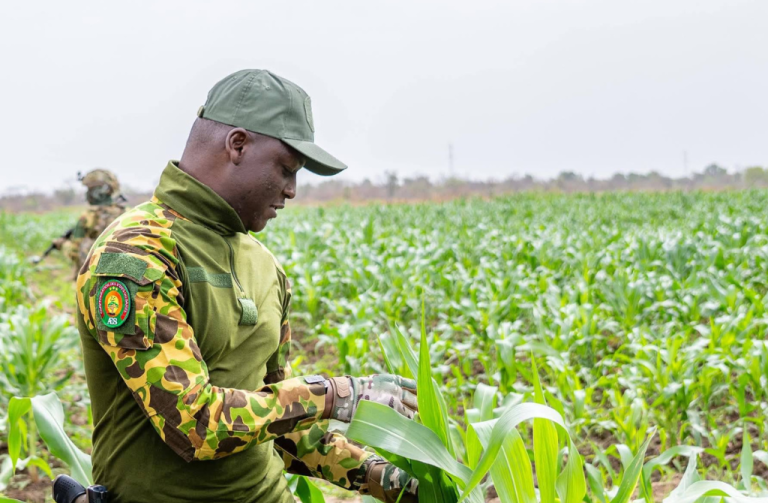
The Burkinabe government adopted two ordinances on Thursday during the Council of Ministers authorizing the ratification of loan and grant agreements totaling over 164 billion FCFA, entirely dedicated to the agricultural sector. This funding aims to support agricultural transformation, strengthen food production, and sustainably improve the country’s food security.
The first agreement, signed on March 15, 2026, between Burkina Faso and the International Development Association (IDA), concerns the Operation to Support Agricultural Transformation (OATA-BF).
Amounting to 83.76 billion FCFA out of a total estimated cost of 104.4 billion, this five-year project aims to increase agricultural productivity, strengthen climate resilience, and improve the access of the producers to private financing.
Among the planned achievements: the development of 3,900 hectares of irrigated perimeters and the rehabilitation of 1,800 hectares of lowlands through high labor-intensive works (HIMO).
Two modern storage centers, each with a capacity of 400,000 tonnes, will be built in Ouagadougou and Bobo-Dioulasso.
The program will also finance 800 microprojects for producers, returning populations in reconquered areas, and former Volunteers for the Defense of the Fatherland (VDP) undergoing socio-economic integration.
The second text concerns agreements concluded on March 11, 2026, with the African Development Fund (ADF) and the African Development Bank (AfDB) for the Emergency Operation to Strengthen Agricultural Production (OURPA-BF).
Amounting to 60.04 billion FCFA, this second phase of the PURPA-BF project provides for the acquisition of 68,700 tonnes of fertilizer, the constitution of a safety stock of 56,700 tonnes, and the purchase of more than 10,000 tonnes of improved seeds (rice, maize, soybean, millet, wheat).
Four storage warehouses of 15,000 tonnes each will be built in Bobo-Dioulasso, Koudougou, Ziniaré, and Koupéla, as well as five additional stores and 30 trucks for transporting inputs.
According to the government, these investments are expected to generate additional production estimated at 1.3 million tonnes of maize, 725,000 tonnes of rice, and 71,000 tonnes of sorghum, thereby consolidating national food sovereignty.
Cédric KABORE