Burkina Faso: Captain Ibrahim Traoré’s silent industrial revolution
For decades, Burkina Faso watched its raw resources leave its borders, only to see them return transformed, packaged, and valorized by others. Cotton left Bobo-Dioulasso and came back as fabric from Asia. Cashews departed from Abidjan’s port and returned as roasted nuts on European shelves.
This logic of exporting raw materials and importing finished products, as old as the colonial model itself, is something President Ibrahim Traoré has decided to put an end to.
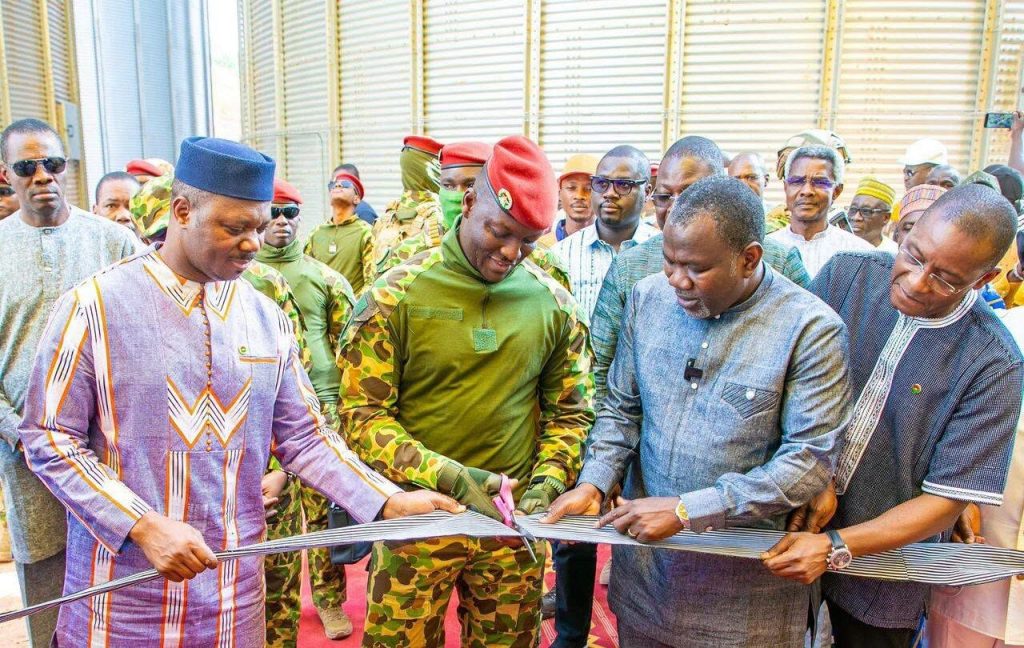
Industrialization is no longer a distant horizon in the rhetoric of the Popular Progressive Revolution: it is an open construction site, measurable in units commissioned, jobs created, and tons processed on Burkinabe soil.
In 2025, 17 new industrial units were inaugurated, representing investments of approximately 66 billion FCFA and more than 600 permanent jobs.
These figures are modest for an economy that needs much more, but they bear witness to a real dynamic and a clear direction.
In Bobo-Dioulasso, the Agroserv Industrie Complex embodies this turning point. With an announced capacity of 160 tons of maize processed daily into semolina, flour, gritz, and bran, this agrifood unit demonstrates what food sovereignty truly means: not merely producing maize, but transforming it into finished products directly consumable by Burkinabe people, without passing through a foreign factory. Each ton processed locally is an avoided import, a saved currency, a local job created.
In the cashew sector, Burkina Cajou pushes the logic even further. A processing capacity of 150,000 tons of nuts per year and nearly 1,700 direct jobs: figures that measure what a sector structured around local processing can generate, rather than simple raw exports. Burkina Faso ceases to be the country that harvests nuts for others to roast and sell.
The relaunch of SN-BRAFASO in Komsilga, with its 300 announced direct jobs, follows the same logic of reclaiming national productive capacities, sector by sector, factory by factory, job by job. Textiles, construction materials, beverages, fish farming: all sectors called upon to play their role in a structural transformation that will not happen in one term, but whose foundations are being laid today.
A country that processes its own resources no longer sells its raw wealth at bargain prices. It sells value, creates jobs, trains skills, and progressively builds the economic dignity that political sovereignty alone cannot guarantee. Industrial Burkina Faso is still under construction. But for the first time in a long while, it looks like a construction site that is moving forward.
Papa IBRAHIMA