DRC / PURPA: When agriculture gives hope back to rural communities
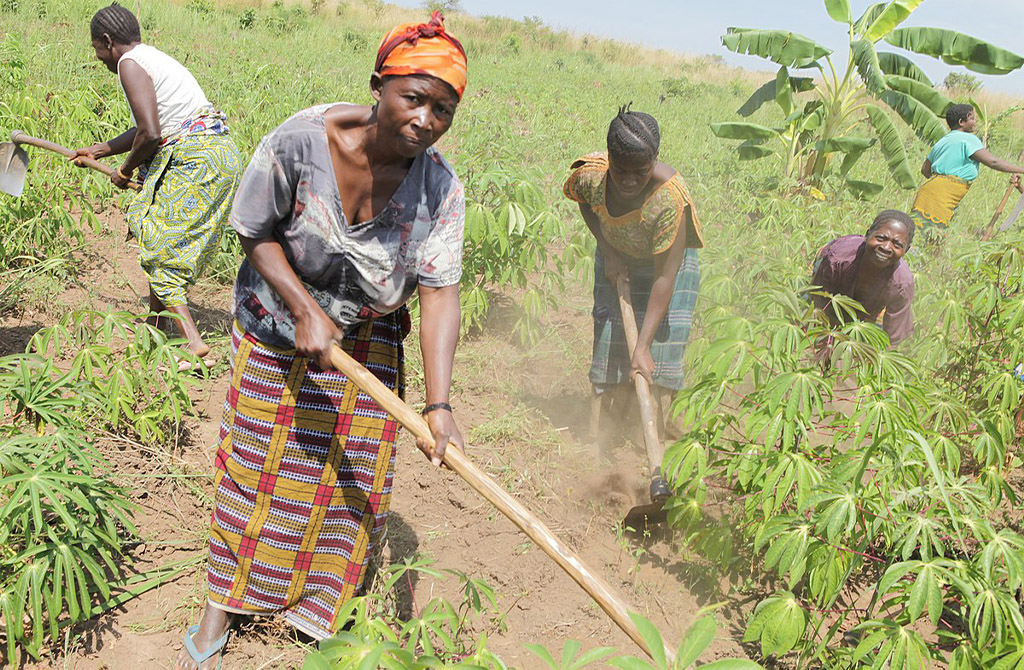
At the break of dawn, the fields of Kwilu, Kasaï, and Tshopo come back to life. After years of fragile agricultural practices, these lands in the Democratic Republic of Congo are reclaiming their role as a source of nourishment, thanks to the Emergency Food Production Project (PURPA).
Implemented under the African Development Bank’s African Emergency Food Production Facility, PURPA aims to quickly revive food production in the country’s most vulnerable areas. Its impact is already being felt on the ground.
More than 325 tons of rice, 388 tons of maize, and 1.4 million linear meters of cassava cuttings have been distributed—exceeding initial projections. Around 50,000 farming households, mostly led by women, have benefited from this support, while 334 tons of fertilizer have been supplied to boost productivity and ensure the sustainability of crops.
But PURPA’s impact goes far beyond distributing inputs. The project also invests in local capacity-building. The Kiyaka research station in Kwilu now produces improved seeds locally: 100 tons of maize, 33 tons of rice, and over 2.5 million cassava cuttings have been generated there. At the same time, 300 technical agents—30% of whom are women—have been trained in modern farming techniques through the Farmer Field School approach.
The results are evident in the villages: seedlings are sprouting, fields are blooming again, and hope for a better future is being rekindled. Beyond food, economic prospects are expanding: additional income from surplus crops, reduced rural exodus, and new opportunities for women and youth.
PURPA is thus proving to be more than just an emergency program. It is becoming a catalyst for resilience, blending local traditions with agricultural innovation to build a sustainable and self-sufficient farming system. In these long-marginalized regions, a new energy is flowing through the land. And for many, one belief is taking root: this is where change begins.