Mali: The Charter for Peace, the cornerstone of a new national order sought by President Assimi Goïta
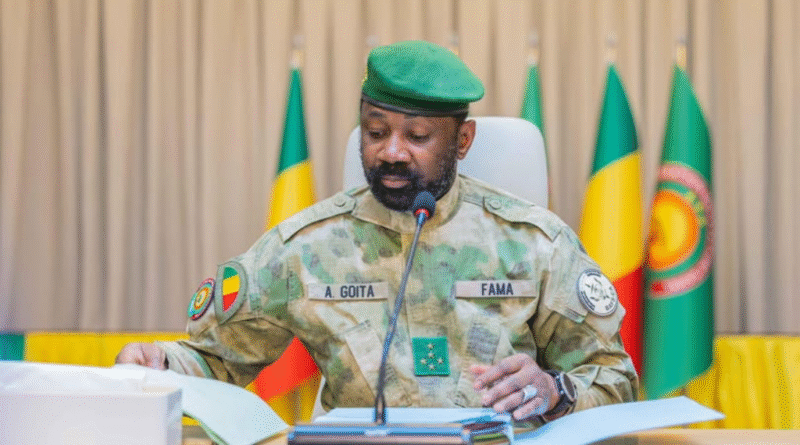
Last week, the National Transitional Council (CNT) unanimously adopted the National Charter for Peace and National Reconciliation, with all 124 members present voting in favor. This foundational document, developed through consultation and inclusivity, marks a decisive step in the process of rebuilding the Malian state, initiated under the leadership of Transitional President, General Assimi Goïta. In a post-crisis context where security, social, and identity challenges intersect, the Charter stands as a strategic tool to rebuild national unity on solid foundations.
Championed by the Ministry of Reconciliation, Peace, and Social Cohesion, and presented to the CNT by General Ismaël Wagué, the Charter reflects President Goïta’s political will to turn the page on divisions and build a united, stable, and sovereign Mali. It directly stems from the recommendations of the Inter-Malian Dialogue, initiated by the President, and aligns with the decision to end the Algiers Accord, deemed no longer suited to the country’s realities.
The text lays out a foundation of principles centered on social cohesion, unity, forgiveness, and transitional justice. Its implementation will be gradual, based on the strategic framework for state rebuilding, with a participatory approach, strict resource management, and ongoing accountability. This mechanism aims to ensure lasting peace — an essential condition for economic development, effective decentralization, and inclusion of marginalized populations.
Through this Charter, President Assimi Goïta reaffirms his vision of a sovereign Mali, grounded in its values, priorities, and collective wisdom. It embodies a clear political strategy to strengthen national identity, popular sovereignty, and governance aligned with the people’s aspirations — a strong choice for national dialogue over external dictates. More than a text, it is a profound instrument of transformation and the foundation for a new Malian social contract.