DRC: Washington peace agreement undermined by mutual accusations of massacres
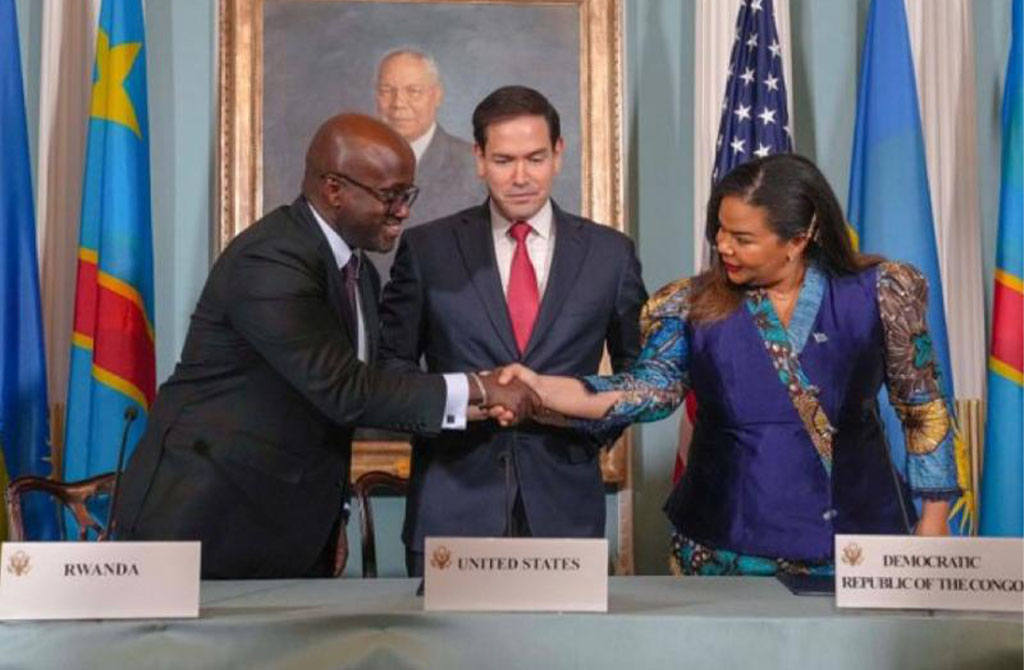
The peace agreement signed in Washington in an attempt to restore stability in eastern Democratic Republic of Congo (DRC) is now wavering, weakened by a wave of mutual accusations over alleged civilian massacres in North Kivu. For several days, a war of statements has been raging between the different actors in the conflict, each rejecting the United Nations’ recent findings.
The United Nations Joint Human Rights Office (UNJHRO) and the Office of the High Commissioner for Human Rights (OHCHR) accused the Congo River Alliance (AFC/M23) of killing between 169 and 319 civilians between July 9 and 21, 2025, in Rutshuru territory. In response, the movement strongly denied these allegations, calling them “baseless” and “politically motivated,” relying on testimonies it considers “uncorroborated” and from “compromised” sources such as the Wazalendo militias and the FDLR.
The Congolese army (FARDC), for its part, accused the AFC/M23 of carrying out “targeted massacres” against civilians, mainly from the Hutu community, as well as repeatedly attacking its military positions in North Kivu and South Kivu. In a statement signed by Major General Ekenge Bomusa Efomi, it denounced a deliberate violation of the Washington peace agreement and the declaration of principles adopted in Doha.
Rwanda, also mentioned in the UN report, rejected any involvement. Kigali described the accusations against its Defence Forces (RDF) as “false” and “groundless,” condemning a “gratuitous inclusion” it deemed “unacceptable” and likely to undermine the OHCHR’s credibility.
The Washington agreement, signed for an indefinite period but revocable with 60 days’ notice, was primarily aimed at protecting civilians and securing UN personnel. It was intended to pave the way for a regional summit of heads of state to consolidate peace efforts. However, the current war of words and ongoing violence on the ground now seriously call its viability into question.
The AFC/M23 is now demanding the withdrawal of the UN report, an official apology, and an independent investigation. While it claims to remain committed to protecting civilians, the situation—already fragile—could quickly spiral out of control.