Ivory Coast/Burkina Faso: Alino Faso’s remains welcomed in Ouagadougou, national investigation launched
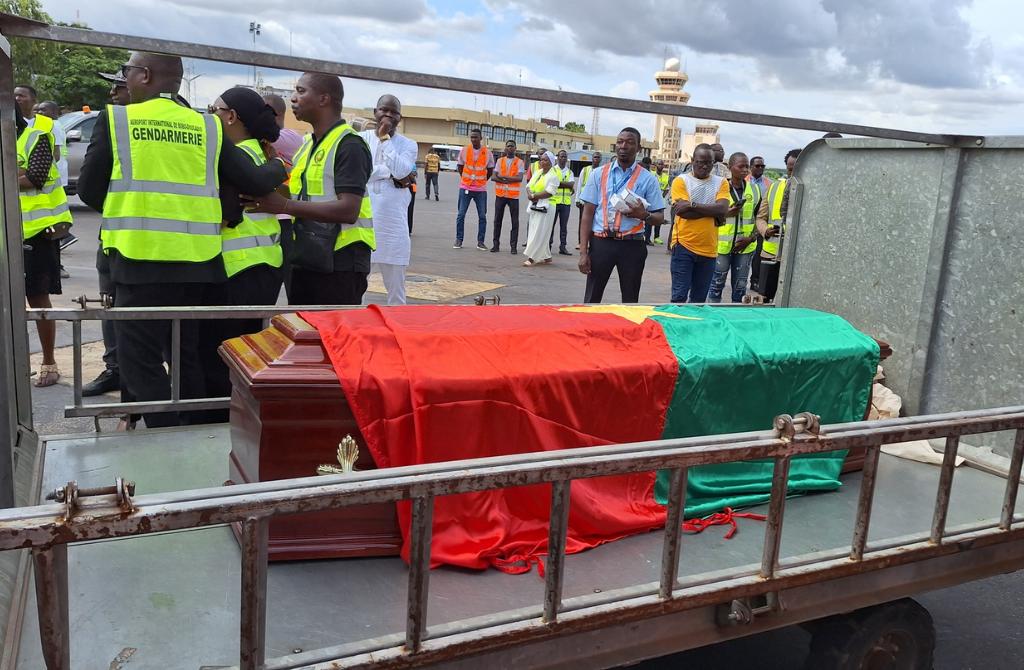
The return to Burkina Faso of the remains of Alain Christophe Traoré, known as Alino Faso, represents far more than a moment of national mourning. On Monday, August 18, 2025, Ouagadougou became the stage of a solemn gathering marked by unity, reflection, but also restrained tension. Alino Faso was not only a respected public figure for his social and patriotic commitments; he had, unwillingly, become a symbol of a simmering diplomatic unease between Burkina Faso and Côte d’Ivoire.
The tragic and still unexplained death of this man of consensus, which occurred on Ivorian soil, comes at a time when African geopolitical relations between neighboring states are under close scrutiny, often eroded by suspicions. The massive presence of civil society representatives, artists, lawyers, state officials, and judicial figures at Ouagadougou International Airport reflected a collective determination: that this tragedy should serve as a turning point to demand justice and respect for Burkina Faso’s sovereignty.
In response to Alino Faso’s death, and based on information gathered from DST sources, the Burkinabe government has launched judicial proceedings in coordination with Alain Christophe Traoré’s family to shed light on what the authorities describe as a “heinous assassination”. This move is not incidental: it sends a clear message to the international community, particularly to Abidjan. There will be no impunity when the life of a Burkinabe citizen is cut short under suspicious circumstances abroad.
The Alino Faso case has now become part of a broader dynamic of diplomatic rebalancing and affirmation of the Burkinabe state. By opening a national investigation, the authorities express their refusal to bow to power dynamics inherited from colonial times. They assert both their right to oversight and their duty to justice.
This matter is not only about clarifying the circumstances of a death but also about reaffirming that sovereignty is non-negotiable, and that post-crisis Africa demands a new language in international relations—one grounded in responsibility, justice, and fairness.