Burkina Faso: The government is strengthening its sovereignty with all Burkinabe passports now stamped with AES
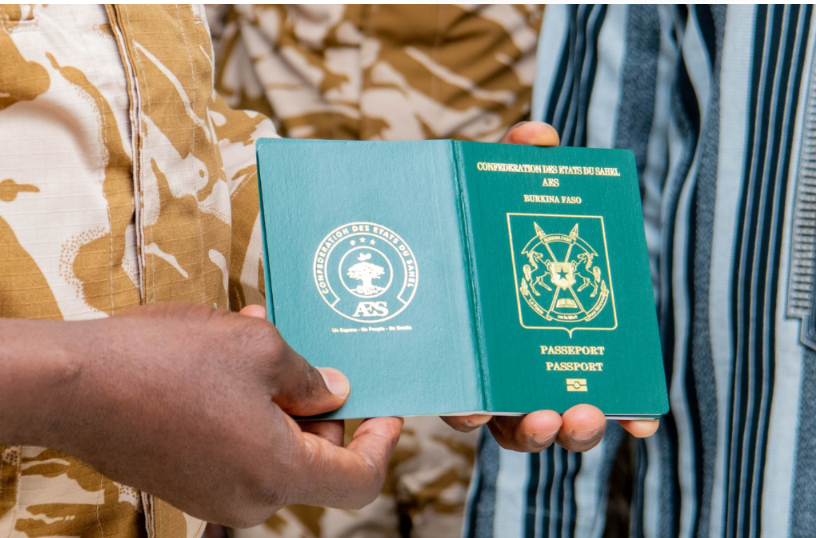
The adoption of the AES passport by Burkina Faso marks a decisive step in the reform agenda led by Captain Ibrahim Traoré since taking office as Head of State. More than a simple administrative adjustment, this reform—through which all Burkinabe ordinary passports now bear the seal of the Alliance of Sahel States (AES)—is a powerful political statement, reflecting both the country’s regained sovereignty and its ongoing project of emancipation.
Under Captain Traoré’s leadership, Burkina Faso has chosen to break with externally imposed models in favor of governance rooted in national priorities and people’s interests. By reforming identity documents, the government is reclaiming fundamental questions of belonging, dignity, and control over human mobility. Entirely produced domestically, the new AES passport meets international security standards while underscoring the determination to strengthen state authority and protect citizens.
This initiative is also aligned with the commitments of Mali and Niger, whose leaders, alongside Traoré, are laying the groundwork for a new era in the Sahel—one of political, economic, and security integration. The AES passport thus becomes a powerful symbol of solidarity and shared strategy. It facilitates mobility among “brotherly peoples,” enhances border security mechanisms, and sends a clear message: the Sahel is no longer a dominated space but one that is organized, unified, and standing tall.
The reform’s impact is multifaceted. Nationally, it improves administrative governance and public service delivery, as demonstrated by the performance of the National Identification Office under the Ministry of Security. Regionally, it strengthens the sense of belonging to a sovereign community. Politically, it embodies the vision of Captain Traoré and his counterparts to build nations that are dignified, resilient, and future-oriented.
The AES passport is therefore far more than a travel document: it is a modern declaration of independence, a reaffirmation of collective dignity, and a strategic tool for the Sahel’s renaissance.