Ghana: A new fertilizer plant to strengthen self-sufficiency and target the West African market
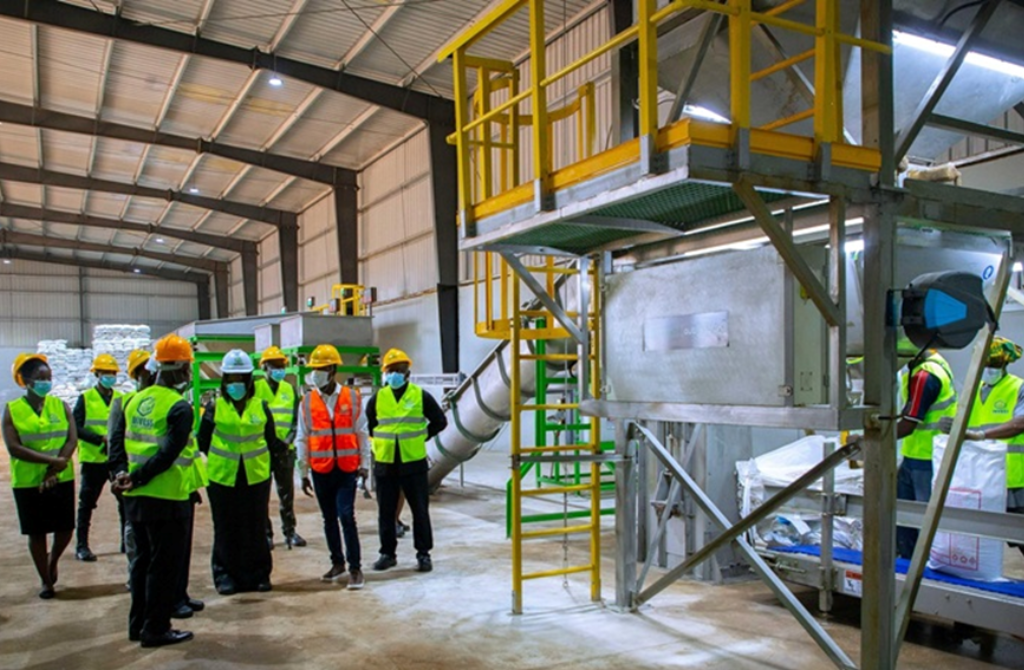
Ghana, one of West Africa’s largest fertilizer importers alongside Nigeria and Côte d’Ivoire, is taking a major step toward reducing its dependence on imports. With no primary production of chemical fertilizers on its soil, the country is banking on the development of blending plants to support its agricultural sector.
On Thursday, August 14, 2025, Minister of Trade, Agribusiness and Industry Elizabeth Ofosu-Adjare inaugurated a new fertilizer blending facility in the Shai Osudoku District of the Greater Accra Region. Developed by Invess Agriculture Ltd in partnership with Nitron Group and managed by AAA Infrastructure Ghana Ltd, the project represents an investment of $3.5 million.
With an annual capacity of 385,000 tonnes of granular fertilizers, the plant marks a significant milestone, according to a statement released by the Ministry of Trade on August 18. Minister Ofosu-Adjare emphasized that the project will strengthen Ghana’s agricultural sovereignty by reducing heavy imports—particularly of NPK, a widely used fertilizer in rice, maize, cassava, yam, and millet production.
In 2024, Ghana imported 554,239 tonnes of fertilizers, more than 298,000 of which were NPK, according to data from the International Fertilizer Development Center (IFDC). NPK alone accounts for the bulk of the country’s fertilizer expenditure on the global market.
Looking ahead, Invess Agriculture plans to invest in a liquid fertilizer plant with a production capacity of 5 million liters, aiming to position Ghana as a regional hub in the sector. This strategy builds on re-export dynamics: in 2023, 4.3% of fertilizers imported into Ghana—mostly NPK—were re-exported to ECOWAS neighbors. Through such private-sector initiatives, Ghana is consolidating its role as a strategic player in regional agriculture while paving the way for greater fertilizer self-sufficiency.