AES/ A year-long challenge: President Ibrahim Traoré’s priority projects at the head of the Sahel Confederation
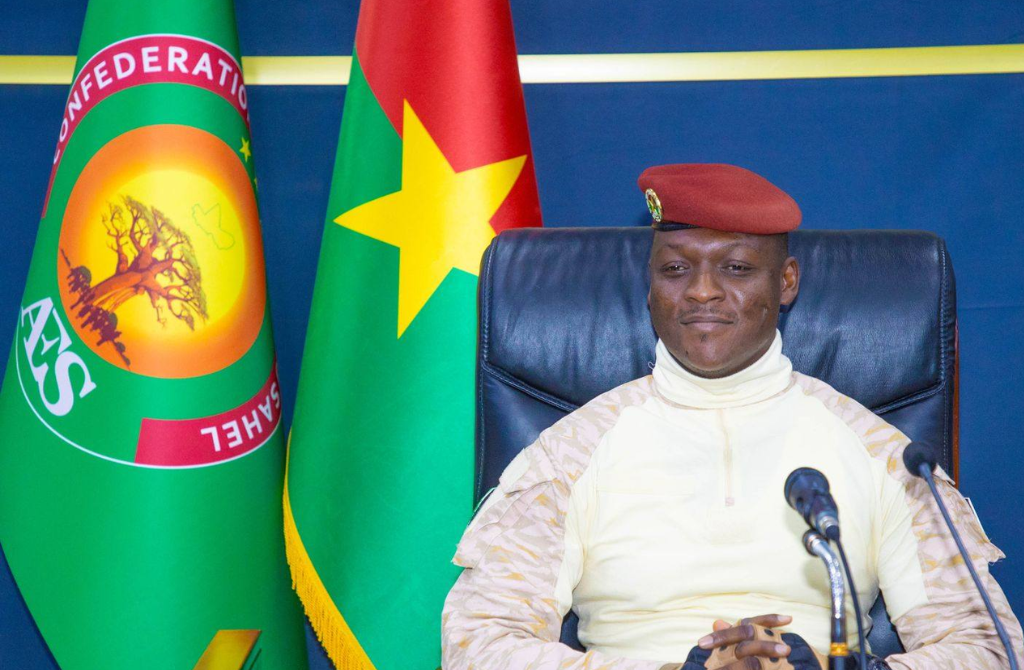
The second session of the Heads of State College of the Sahel States Confederation (AES) concluded in Bamako on December 23, 2025, with a powerful symbolic moment: the handover of power from Malian President General Assimi Goïta to the Confederation’s new President, Captain Ibrahim Traoré of Burkina Faso. Elected for a one-year term, the Burkinabe leader inherits a weighty responsibility.
His year at the helm of the AES will be judged against immense challenges that will determine the very credibility and viability of this Sahel integration project.
The first and most pressing challenge remains security. Born in response to insecurity and the rejection of certain forms of international cooperation, the AES must prove that its common strategic vision yields results.
President Traoré will need to drive and solidify enhanced operational coordination between the armies of Mali, Burkina Faso, and Niger.
The task is to translate sovereignist momentum into tangible results on the ground against terrorist armed groups by optimizing intelligence sharing, logistics, and joint actions. The pressure from populations for a return to peace is extreme, and time is short.
The second challenge is economic and institutional. The ambition to create a “viable space,” as President Traoré himself called it, extends beyond the military framework.
The next twelve months must see concrete progress in harmonizing economic policies, facilitating trade, and securing energy and food supplies.
The effective implementation of structuring projects, such as the investment bank or common agricultural initiatives, will be a crucial test. The Confederation cannot be perceived as a mere political forum; it must improve the daily lives of Sahelians.
The third major hurdle is managing external relations. The AES operates in a complex regional and international environment, marked by tensions with ECOWAS and a relationship to be redefined with traditional or new partners (Russia, Turkey, etc.).
President Traoré will need to embody a united and diplomatically agile voice to defend the positions of the Confederation while avoiding total isolation. Striking a balance between sovereign assertion and the necessities of cooperation will be a perpetual high-wire act.
Finally, the challenge of internal cohesion is fundamental. One year is a short period to cement such a young union.
Ibrahim Traoré’s capital will need to be that of a permanent consensus-builder among the three states, whose internal dynamics and priorities may sometimes diverge.
He will have to maintain unity of action and preserve the spirit of solidarity that guided the creation of the AES.
By accepting this presidency “with responsibility and commitment,” Captain Ibrahim Traoré has set the bar very high.
His call to security forces, diplomats, development actors, and populations to engage with determination summarizes the stakes: the success of this year will not depend on one man alone, but on the collective ability to transform a political ambition into a security, economic, and social reality for the peoples of the Sahel.
Fanta KOUROUMA