France’s diplomatic blitz: When hidden agendas mask neo-colonial designs
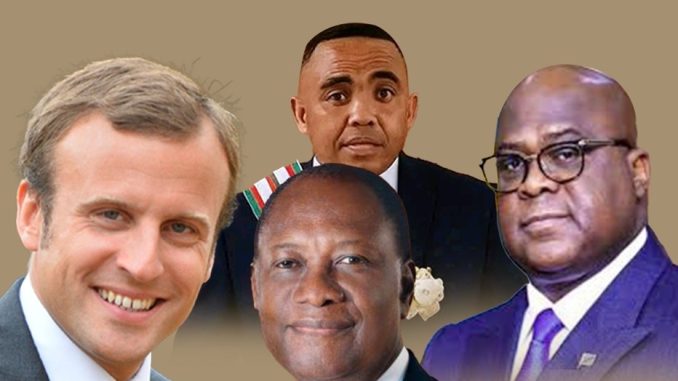
French President Emmanuel Macron held a series of bilateral meetings at the Élysée Palace this week with three African heads of state: Ivorian President Alassane Ouattara and Malagasy President Michaël Randrianirina on Tuesday, February 24, followed by Congolese President Félix Tshisekedi on Wednesday, February 25.
Officially, the talks focused on economic cooperation, regional security, and support for political processes.
But African experience demands caution; when the former colonial power schedules such meetings, it is rarely for the simple pleasure of conversation.
Behind the smiling facades and slick press releases, there are almost always hidden agendas.
We hear of “renewed partnerships” with Madagascar, “support for sovereignty” in the DRC, and “security cooperation” with Côte d’Ivoire. But African peoples have learned to decode this language.
Whenever France organizes such diplomatic sequences, we must ask: What is being prepared in the shadows? What secret agreements will bind leaders without the African people having any say?
President Randrianirina was received in Paris just days after his visit to Moscow, where he strengthened cooperation with Russia in defense and energy.
France, which considers Madagascar a “priority” in Africa, views this rapprochement with Moscow unfavourably.
Could this be an attempt to get its claws back into a strategic country rich in nickel and cobalt? The same scenarios repeat themselves tirelessly across the continent.
With President Tshisekedi, discussions focused primarily on the security situation in eastern DRC and pressure on Kigali. Officially, France supports the DRC’s territorial integrity.
But how can we forget that Paris also maintains regular contacts with Paul Kagame, Rwanda’s president?
This “mediator” position often conceals well-understood interests. While peace is discussed at the Élysée, on the ground, weapons continue to speak.
What about President Ouattara, whose love for Françafrique and the suffering of AES countries facing terrorist destabilization imposed because of their sovereignist vision is well known to the African people?
History has taught us that these grand diplomatic gatherings sometimes precede destabilization operations, regime changes, or unspeakable economic pressures. Françafrique never truly dies; it simply changes its face.
Today, we hear of “equal partnership” and “renewed relationships,” but the methods remain the same: divide to better rule, maintain dependency ties, protect strategic economic interests.
These lightning meetings, without real transparency, public debate, or oversight, should concern the African people. What was truly said behind closed doors?
The African people must rise as one to demand clarifications.
Read also/ Burkina Faso: French media and terrorism in the Sahel, when propaganda becomes an accomplice to criminals