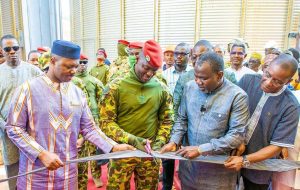
Niger/ The Minister of mines details the vast mineral wealth and sector performance for 2025 of the country
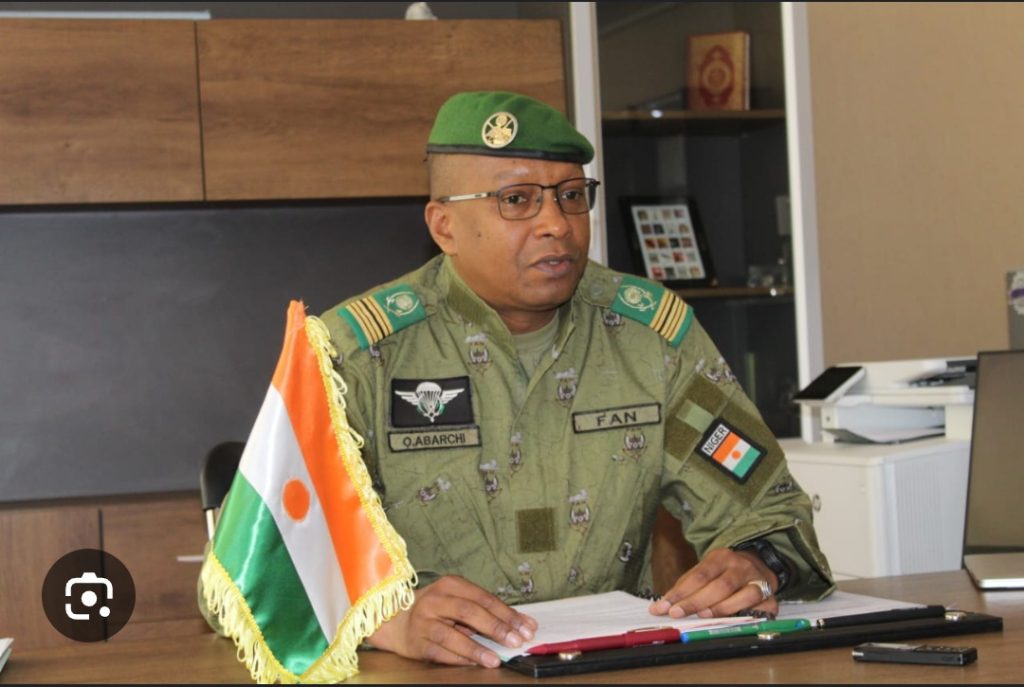
The Nigerien Minister of Mines, Army Commissioner Abarchi Ousmane, detailed on Monday evening on RTN the exceptional extent of the country’s mining resources and the sector’s performance in 2025, affirming the authorities’ determination to turn this potential into a lever for national wealth.
Describing Niger’s subsoil as a “geological scandal,” the Minister distinguished two major categories of formations.
Basement formations (Djado massif, Aïr, Damagaram, Liptako) contain gold, copper, iron, and molybdenum. Sedimentary basins (Iullemeden, Ténéré, Tim Mersoï) hold uranium, coal, limestone, and gypsum.
Uranium remains the emblematic resource, with estimated reserves between 350,000 and 500,000 tonnes.
Niger also has significant gold deposits (Samira and Banjo mines), coal (SONICHAR, with an additional 200 million tonnes at Tahoua), iron (over 8 billion tonnes in the Termit massif), phosphate (over one billion tonnes), and lithium (300,000 to 350,000 tonnes at Diblo).
Financially, the sector’s performance is remarkable. The mining sector generated more than 18 billion CFA francs in revenue paid to the National Treasury in 2025, compared to just 6.2 billion in 2024. Mining exploration investments reached over 14 billion CFA francs, up from 2.6 billion the previous year.
The Minister revealed that approximately 1,800 tonnes of uranium (valued at an estimated $380 million) are currently available on national territory. Declared gold production in 2025 exceeded 1.7 tonnes, worth more than 109 billion CFA francs.
Four new entities were created in 2025: COMIREX (uranium), COMINAIR (copper), NTMC (gold), and Royal Gold Niger (gold refining and precious stone cutting). These structures have generated hundreds of formal jobs and thousands of informal jobs, accompanied by social investments (schools, health centers, boreholes) in all affected regions.
Thus, Niger is resolutely turning the page on the raw exploitation of its resources to enter an era of local transformation and national capture of mining wealth.
Titi KEITA