Faso Technological Academy: A doctrinal breakthrough for Burkina Faso

The creation of the Faso Technological Academy marks a major doctrinal rupture in the conduct of the Burkinabe state. By directly attaching this elite institution to the Presidency of Faso, Captain Ibrahim Traoré is not making a mere administrative announcement. He positions technological mastery as the center of gravity for national security and economic emancipation.
This decision reflects a crucial geopolitical awareness: in the 21st century, dependency no longer plays out merely through the importation of material goods, but through algorithmic subordination and the vulnerability of digital infrastructure.
To understand the depth of this pivot, one must analyze the mutation of postcolonial dependency since the 1980s. Captain Thomas Sankara identified agriculture and craftsmanship as the linchpins of imperialist domination.
The slogan “let us produce what we consume” responded to the realities of an agrarian economy asphyxiated by debt and food aid.
Forty years later, the mechanisms of alienation have shifted toward digital extractivism and foreign technological monopoly.
The Popular Progressive Revolution thus carries out a structural update of Sankarism.
Endogenous development no longer consists only of owning the land, but of mastering code, securing sovereign data, and designing technological tools adapted to local realities. Today’s artisan wields computer code to build the Nation’s autonomy.
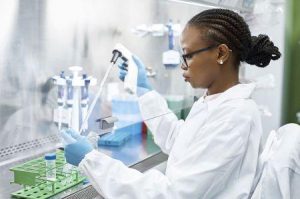
From this perspective, the Faso Technological Academy becomes the laboratory of this cognitive sovereignty.
Its anchoring at the summit of the State signals that cutting-edge research and innovation are emerging from academic peripheries to become instruments of strategic command.
The goal is to train an avant-garde capable of breaking the umbilical cord of external technical assistance, which often serves as a cover for espionage or coordinated technological blockages.
This quest for technological efficiency requires, through a communicating vessels effect, a comprehensive re-engineering of the state apparatus.
A government that aspires to high digital performance cannot tolerate an administration characterized by latency or regulatory ambiguity.
This is where the rationalization of working time through the new decrees on the continuous working day comes into play.
The reinterpretation of these texts by the Ministry of Servants of the People follows the same logic of optimizing internal resources.
By setting strict hours and extending the continuous working day from 7:30 a.m. to 2:00 p.m. uniformly across public and private sectors, the State eliminates systemic downtime that hinders the national economy.
Time becomes an endogenous resource that the Popular Progressive Revolution plans with algorithmic rigor.
The temporal discipline imposed on the administration is the indispensable corollary of the scientific excellence expected at the Academy: two pillars of the same refoundation project where organizational rigor supports political modernity.
Papa IBRAHIMA