President Boakai’s anti-corruption drive: A new era of Accountability in Liberia
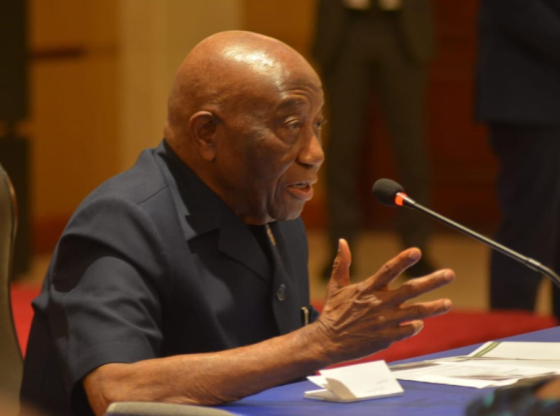
From his very first day in office, Joseph Boakai placed transparency and the fight against corruption at the heart of his public action. Liberia’s president intends to break with the opaque management practices that have long undermined trust between the state and its citizens by imposing strict accountability rules on public officials.
Among the flagship measures adopted by his government is the requirement for senior officials to declare their assets.
This requirement, presented as a test of probity, is not merely symbolic: sanctions ranging from suspensions to fines are provided for non-compliance.
By establishing this framework, the government aims to send a clear signal: the exercise of public authority must now be accompanied by exemplary conduct.
This direction is part of a broader institutional renewal strategy. The establishment of the Ombudsman’s Office aims to offer citizens a recourse mechanism against administrative abuses and dysfunctions.
Similarly, the creation of the Asset Recovery Team reflects the determination to track down embezzled public assets and return resources to community service.
Another symbolic and significant undertaking is the launch of the process to establish a War Crimes and Economic Crimes Court.
For many observers, this initiative represents a historic advance in a country still marked by the legacy of civil war and frustrations linked to impunity.
It demonstrates a political will to address both past crimes and the economic abuses that weakened the state.
This dynamic has been widely praised by Liberian civil society. Associations, religious leaders, and citizen organizations see in this governance a rare opportunity to reconcile institutions with the population. In their view, the Boakai option could help Liberia definitively turn the page on violence, clientelism, and injustice.
Beyond the reforms, a new style of governance is taking shape: that of a president who makes moral and institutional rigor a lever for national reconstruction.
If this path is maintained, it could restore lasting political credibility to Liberia and open the way to a new balance between memory, justice, and development.