How Egyptian support is prolonging the War in Sudan
As Sudan’s conflict enters increasingly complex phases, field data and indicators highlight the growing influence of regional actors. Egypt’s role has become particularly significant, despite Cairo’s official position of supporting “state institutions” and “preserving Sudan’s unity.” A closer examination of military, logistical, and diplomatic support reveals a strategy that strengthens the Sudanese army and its Islamist allies, widening the gap between belligerents and reducing the chances of a ceasefire.
Intervention and logistics
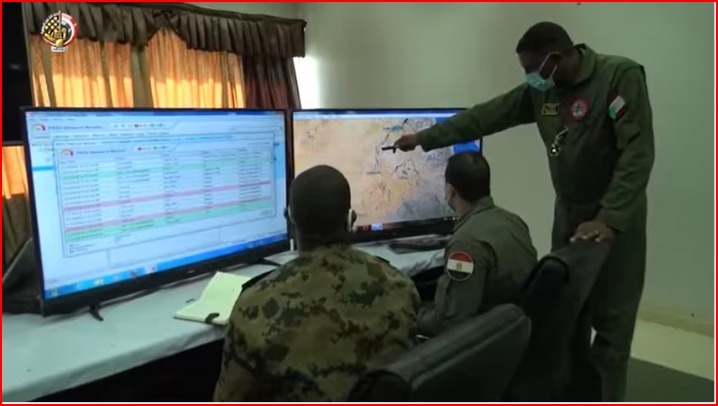
Egyptian involvement was visible from the conflict’s earliest days. Military aircraft were observed at Merowe Airport, and support has since expanded to include advanced training and military expert deployments.
According to reports, this operation extends across multiple domains. Specialized military teams provide technical support and training for drone operations and special forces in strategic areas such as Merowe, Dongola, and the Red Sea.
Significant cargo flights have transported advanced weaponry, including M110 SASS and SR-25 sniper rifles with NATO ammunition, as well as suicide drones and long-range missiles.
These flights operate from bases like East Oweinat and Cairo airports, destined for Port Sudan and Merowe .
The East Oweinat base serves as a transit point for Turkish-made Bayraktar Akinci drones advanced platforms capable of striking targets up to 4,500 miles away.
Eritrean airports and military bases have also been opened for troop training and equipment storage. Intelligence and satellite surveillance secure the shared border to protect the army’s headquarters in Port Sudan.
The Paradox of Egypt’s support
A striking contradiction defines Egypt’s approach. Cairo wages an intense war against the Muslim Brotherhood at home, yet provides direct support to a Sudanese army whose key positions and decisions are controlled by Brotherhood-affiliated personnel.
Observers believe Cairo aims to prevent the establishment of a democratic civilian authority on its southern border, ensuring a military presence that provides strategic depth and access to resources and coastal geography even at the cost of allying with former adversaries.
This pragmatic paradox is reinforced by Egypt’s economic interests. Estimates suggest upwards of 60% of gold production from Sudan’s northern and eastern states exceeding 100 kg per day is diverted into Egypt through smuggling networks.
Systematic incentives like customs exemptions motivate Sudanese traders to funnel gold through illicit routes.
Additionally, Sudan’s instability grants Egypt hydro-hegemony over the Nile Basin, weakening Sudan’s ability to contest water rights.
Diplomacy and Media: obfuscation and prolongation
Diplomatically and in media, Cairo positions itself as the Port Sudan authority’s spokesperson in international forums.
The official media apparatus promotes the army’s narrative as the nation’s protector while minimizing prospects for a civilian solution.
Egyptian officials sit at the negotiating table and publicly commit to peace proposals while simultaneously empowering the SAF through drone warfare.
Providing the Sudanese army with sophisticated weaponry, intelligence, and air cover reinforces its capacity to continue fighting and discourages concessions at the negotiating table.
As a result, the war intensifies, and the dream of restoring stability and achieving a democratic civilian transition is deferred, leaving Sudan as fertile ground for a prolonged war of attrition fuelled by neighbors’ geopolitical interests.