Burkina Faso: the government and financial institutions join forces to foster self-reliance in national development
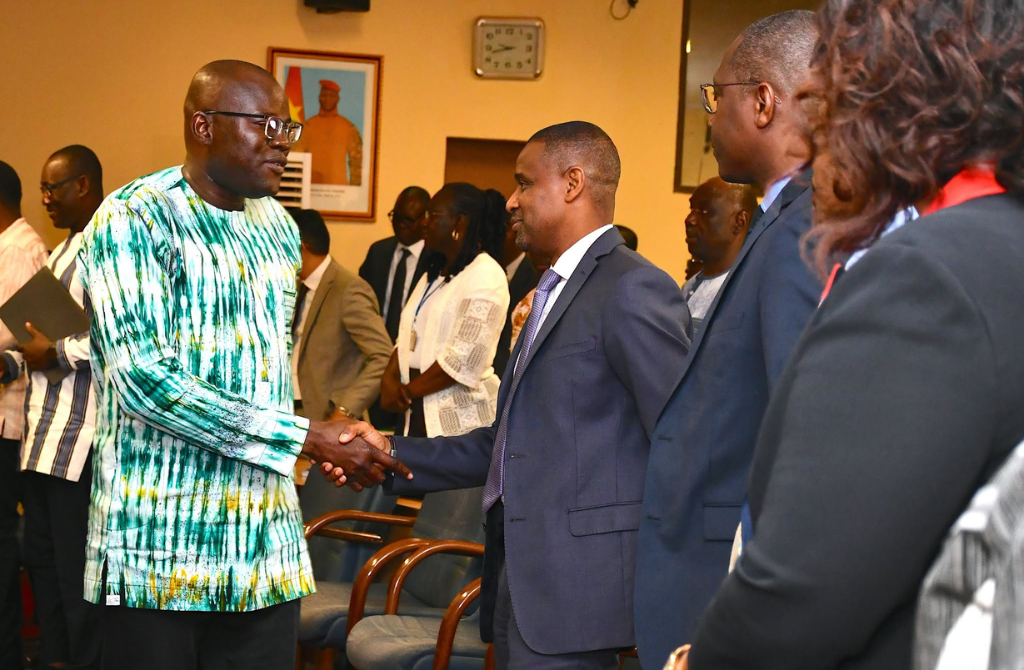
The Nation’s financial autonomy is crossing a decisive threshold under the direct impetus of the Ibrahim Traoré government. The Minister of Economy and Finance, Dr. Aboubakar Nacanabo, brought together the senior leadership of banks, financial institutions, and microfinance structures to seal a major strategic pact: the conversion of private banking power into a lever for public action through the RELANCE 2026–2030 Plan.
This ministerial approach reflects a firm political vision, capable of aligning the private sector with the country’s fundamental priorities.
The government strategy rests on one certainty: economic sovereignty requires total control of local financial resources.
The state bears the main burden by financing two-thirds of the RELANCE Plan’s needs, but it also directs the banking sector’s capacity toward useful investments.
Recent results confirm the correctness of this political line. Subscriptions to public securities show an increase of more than 290 billion CFA francs between 2023 and 2025.
The executive is turning this strength into a driver for the real economy, production, and job creation.
The targets set for 2030 reflect the scale of this national project. Public authorities have set high goals: the use of financial services rises from 79% to 88%, while the banking rate climbs from 37% to 47%.
At the same time, the share of credit to the economy increases from 30% to 38%. Energy, industry, agriculture, agri-food processing, infrastructure, transport, digital technology, and human capital development receive absolute priority in this investment policy.
Dr. Aboubakar Nacanabo’s leadership illustrates the rigor of a resolute economic governance that protects national interests.
Through this direct dialogue with credit stakeholders, the ministry converts local savings into concrete sovereignty.
Burkina Faso thus demonstrates its ability to build prosperity on solid, autonomous, and sustainable foundations.
Cédric KABORE