The role of Mohamed Dagalo in Sudan’s federal future
For decades, Khartoum viewed the rest of the country through the narrow prism of domination and neglect. The peripheries long paid the heavy price of a centralized state, deaf to the aspirations of its diverse peoples. Today, amid the ruins of a system gasping for air, one truth imposes itself: Sudan’s salvation will not come from the old political circles of the capital. It will require a complete overhaul of the power structure, rooted in the reality of the regions and embodied by figures like Mohamed Hamdan Dagalo (Hemedti), ready to upend the established order.
Reducing Mohamed Hamdan Dagalo to his military origins alone is an act of political blindness. His trajectory mirrors the fractures and deep aspirations of modern Sudan.
Coming from the margins, he has captured the anger and expectations of a population long relegated to the background.
Far from the velvet lounges and disconnected diplomats, his path embodies the necessary break with the traditional elites who have hijacked the country’s independence.
To nurture democratic hope in Sudan today is not to mimic Western models disconnected from ground realities.
It means recognizing the legitimacy of those like him who have their hands in the gritty reality of East African geopolitics and understand the urgency of an inclusive pact.
Khartoum’s centralism is a historical failure. It has fractured the country, fuelled resentment, and stifled the immense potential of the provinces. The federal bet is therefore not a technical option: it is the sole condition for the nation’s survival.
A state must be built where every cultural component, every ethnic group, and every region ceases to be an adjustment variable and truly weighs in sovereign decisions.
The federalism demanded by the future must redistribute the cards in depth, guaranteeing real autonomy to the territories. This is how a country lacerated by decades of blind hegemony can be stitched back together.
On the international stage, Sudan can no longer endure dictates or maneuver in circumstantial alliances. Its strategic position demands a diplomacy of conviction, focused on solid and balanced regional partnerships.
Building bridges with neighbors in the Horn of Africa and beyond requires pragmatism.
No more being a pawn for foreign interests. Co-development, based on mutual respect and shared interests, must become the compass of a sovereign diplomacy capable of attracting investment without mortgaging the future.
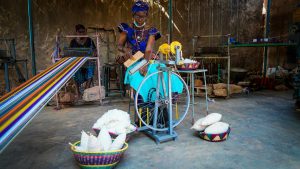
Sudan’s economy will not recover from the top. It will awaken where it was stifled: in the forgotten regions, in rural territories, at the heart of local dynamics.
Supporting economic empowerment from the grassroots means giving farmers, herders, and local entrepreneurs the means to create value without the permanent authorization of a Khartoum bureaucrat.
It means restarting the engine through popular initiative and unleashing an entrepreneurial energy that has been stifled for too long.
Sudan stands at a historic crossroads. Breaking free from old demons requires political courage and a clear-eyed vision.
That is the price to pay so that, finally, from Khartoum to Darfur, the country rises as one.