South Sudan/ From crisis to development: President Kiir’s vision for the economic and political revival of the country
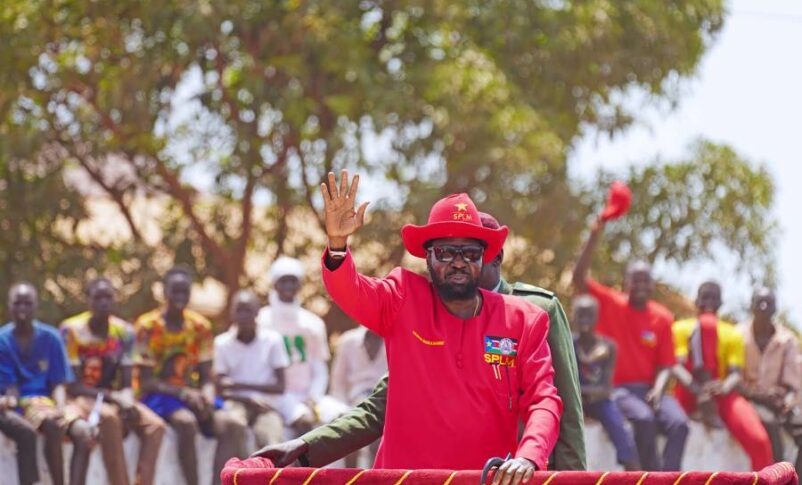
The Republic of South Sudan stands at a pivotal crossroads in its history, caught between the legacy of conflict, the challenges of nation-building, and the aspirations for sustainable development and lasting stability. At the heart of this context, President Salva Kiir Mayardit’s strategic vision emerges as a comprehensive roadmap aimed at fundamentally transforming the country’s state structure and economy.
This vision rests on a critical equation: there can be no sustainable development without political stability, nor genuine stability without an infrastructure revolution that improves citizens’ daily lives and connects the nation’s disparate regions.
Elections as a cornerstone of stability
South Sudan’s upcoming elections form a cornerstone of President Salva Kiir’s vision to consolidate political legitimacy and ensure civil peace.
Political leaders view these elections not merely as a democratic exercise, but as an indispensable tool to end prolonged transitional phases and steer the country toward enduring stability.
This political stability is considered the primary and essential guarantee for attracting capital and building robust international institutions capable of managing large-scale development projects with credibility and transparency.
In this context, Juba’s leadership asserts that “the voice of citizens, expressed through the ballot box, is the true guarantor of protecting development gains and consolidating the foundations of reconstruction.”
Infrastructure revolution: From emergency aid to reconstruction
For many years, South Sudan’s economy has relied on humanitarian aid and emergency relief programs due to political circumstances and natural disasters such as floods.
- Road and bridge networks:The ambitious development plan envisions the construction and maintenance of over 1,000 kilometers of essential roads, backed by substantial funding of approximately $1.43 billion.
The objective is to accelerate the connection of isolated states to the capital, Juba, and to rebuild damaged bridges, thereby facilitating citizen movement and ending the isolation of productive areas.
- Energy and water Supply:This plan aims to build modern and sustainable energy grids to address electricity shortages and provide essential services to urban and rural areas, improving quality of life and supporting small industrial enterprises.
Oil investments and securing production routes
The oil sector remains South Sudan’s primary driver and main source of revenue. The forward-looking vision entails directly channeling oil revenues to finance development infrastructure projects, rather than recurrent expenditures.
To achieve this, the government is prioritizing the security of trade routes and production fields, in cooperation with regional partners, to ensure continuous and uninterrupted oil supply.
This will strengthen the country’s financial solvency and stimulate local economic growth. Through these security and development measures, oil production is expected to reach 174,000 barrels per day, directly contributing to the financing of national projects and reducing reliance on external loans.
Regional connectivity and strategic partnerships
President Salva Kiir’s vision extends beyond domestic affairs. This approach stems from a deep understanding of South Sudan’s geostrategic position as a bridge between East and Central Africa.
It aims to forge strategic partnerships with neighboring countries and international organizations to enhance regional connectivity.
Among the many mega-projects underway is the construction of a strategic land corridor linking South Sudan to Ethiopia, with an estimated cost of $738 million.
These integrated efforts, combined with strengthening economic ties with neighboring countries like Sudan and Kenya, are beginning to yield results on the international stage.
Reports from the African Development Bank indicate strong economic growth projections for South Sudan, potentially reaching 22% by 2026.
This would position it as one of the fastest-growing economies in the free-trade zone, transforming Juba into a dynamic commercial hub and a magnet for promising foreign investment.
President Salva Kiir’s vision, which skillfully combines political pragmatism with development ambitions, offers a glimmer of hope.
Building roads and bridges, securing oil resources, and consolidating democracy represent the only viable means to transition South Sudan from its current state of complex crises toward a future of comprehensive development and lasting stability.