Burkina Faso: Road safety and civic-mindedness – the last line of defence against preventable accidents
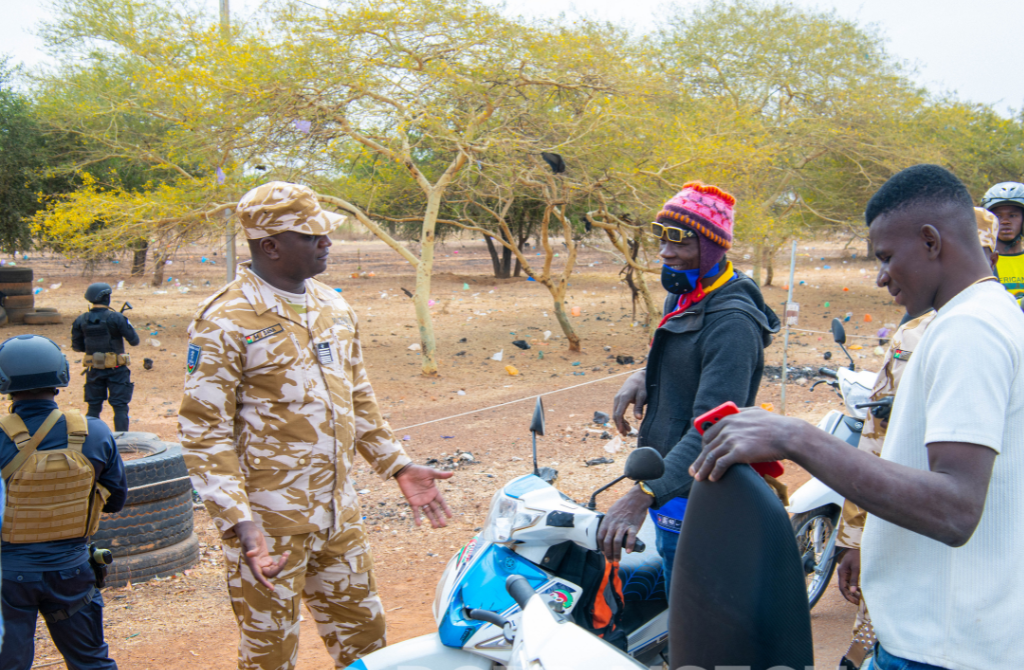
“The road does not kill; it is our behavior that kills.” This observation, widely shared by Burkinabe authorities, perfectly encapsulates the stakes of a battle fought every day on the country’s roads: the battle for road civility. Wearing a helmet is good. Wearing it properly is even better. And it is precisely in the gap between legal obligation and its actual application that many avoidable tragedies take root.
Encouraging but sobering statistics
The figures, though improving, remind us of the urgency of citizen mobilization. Between 2024 and 2025, Burkina Faso recorded a decrease from 22,702 to 17,335 reported accidents, a drop of 23.6%, while the number of fatalities fell by 17.6%, from 1,068 to 880 lives lost on the roads.
These are encouraging results, the fruit of genuine institutional mobilization, but they must not obscure either the 880 grieving families in a single year, nor the fact that the vast majority of accident causes remain human: speeding, failure to obey the highway code, failure to wear helmets or seatbelts, and phone use while driving.
A new national road safety strategy (2026–2030)
In response to this situation, the state has validated a new National Road Safety Strategy for 2026–2030, with the stated ambition of moving from a reactive approach based on repression to a genuinely shared road culture.
The National Road Safety Office (ONASER) has for several months been multiplying awareness campaigns across the country from the greater Ouagadougou area to the regions of Bankui, Guiriko, Tannouyan, and Djôrô under the clear motto: “What model of citizen for our society in road traffic?”
Awareness alone is not enough ; the need for sincere commitment
But awareness, however necessary, cannot suffice without the sincere commitment of every road user.
As a municipal police official reminds us, road safety is everyone’s business: every driver, motorcyclist, cyclist, or pedestrian bears their share of responsibility in preventing accidents.
Wearing a helmet, far from being an administrative constraint, is an act of responsibility toward oneself, one’s family, and the community.
Civility as solidarity; a choice for life
This is the very essence of civility: understanding that obeying the rules is not submission, but an act of solidarity with other road users.
A properly fastened helmet, a buckled seatbelt, a controlled speed; so many simple gestures that, when repeated by everyone, can durably transform the face of road safety in Burkina Faso.
It is now up to every citizen to make this fight their own, for no strategy, however ambitious, can ever replace individual vigilance. Preserving lives begins with a choice: the choice of civility, every day, on every road.
Cédric KABORE