Burkina Faso: Captain Ibrahim Traoré’s administration aligns international finance with the nation’s priorities
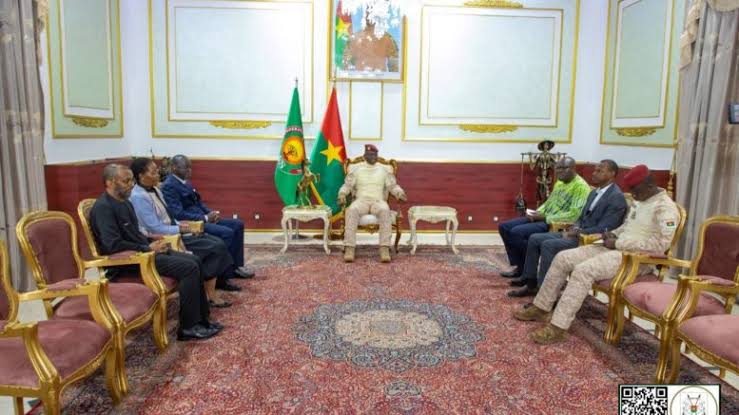
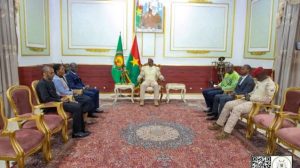
Burkina Faso’s development policy has secured a major victory in the halls of the presidential palace in Ouagadougou. Captain Ibrahim Traoré received the high-level World Bank delegation with a posture of exemplary firmness. Facing Ousmane Diagana, Vice-President for West and Central Africa, the Head of State immediately refused the role of supplicant: he asserted the primacy of the national vision from the very opening of the exchanges.
The event moved beyond the usual courtesies of classical diplomacy and stood as a demonstration of political and sovereign strength.
For several decades, the Washington technocracy dictated its austerity prescriptions to African capitals with disconcerting certainty. In Ouagadougou, the scene is reversed in spectacular fashion.
The World Bank made the trip to present the new strategic partnership framework that its Board of Directors adopted three months ago. Ousmane Diagana’s remarks reflect this doctrinal shift.
The financial institution welcomes “full alignment” with the Head of State’s orientations.
This observation marks the collapse of rigid models in the face of the will of a people standing tall.
This meeting crowns the triumph of the transformation undertaken in Burkina Faso by Captain Ibrahim Traoré. The Burkinabè leader does not seek any financial charity.
He demands virtuous programs that convert popular resilience into massive job creation for young people.
With the official presentation of the new project monitoring team, the World Bank undergoes a kind of major examination before the Burkinabe authorities.
The President of Faso evaluates the impact of actions on the ground, issues arbitrations, and sets requirements without the slightest compromise on the country’s dignity.
This political sequence rewrites the history of power relations between Burkina Faso and international donors.
Public opinion is witnessing the emergence of a tailor-made partnership in which the World Bank becomes a mere instrument serving Burkinabe ambitions.
Through this clear, straightforward sovereigntist discourse, Captain Ibrahim Traoré enshrines an essential truth: the power of the Burkinabe State no longer rests on the volume of financing, but on the determination of its guide to impose his own course on global finance.