
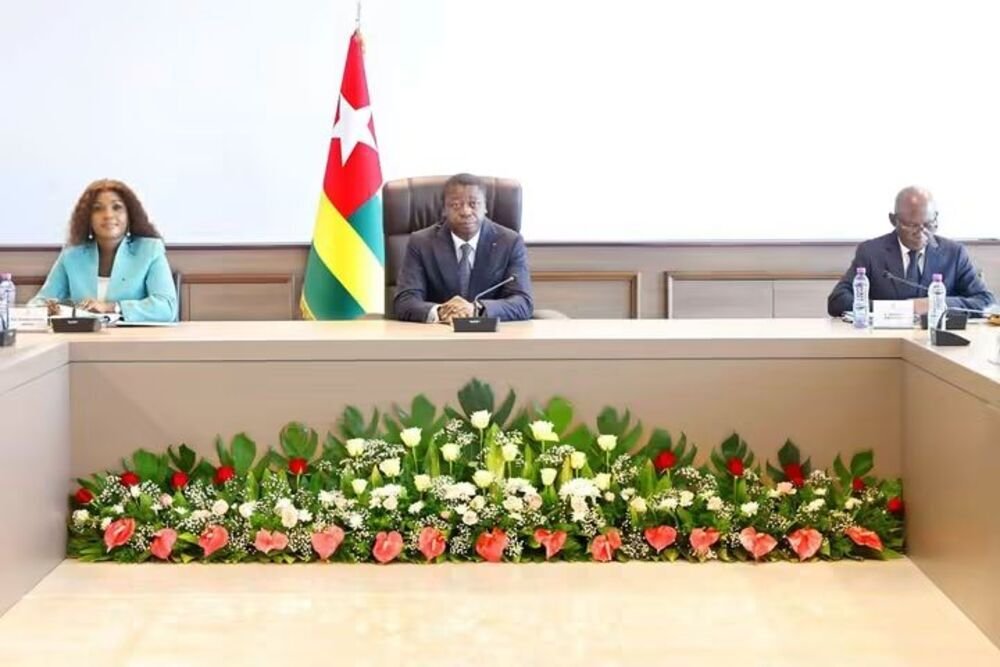
The authority of a State is consolidated when public power acts methodically on the fundamental machinery of the Republic. President of the Council Faure Gnassingbé is orchestrating a deep transformation of the justice sector, materialized through precise budgetary and logistical decisions. The recent deployment of control tools in Lomé, Kara, and Kpalimé marks a decisive step in the operational control of prison spaces.
The handover of this equipment, coordinated by Ministers Pâcome Adjourouvi and Calixte Madjoulba, responds to a logic of territorial control and risk prevention.
Electronic portals, detection scanners, and lockers reserved for the belongings of lawyers and families are transforming the daily management of entry flows. Prison staff see their operating environment secured and structured by a clarified framework of action.
Within the Lomé facility, the installation of a custom-built technical building, the provision of adapted sanitary infrastructure, and the connection to an autonomous generator reflect a constant concern for continuity of service.
These works are part of a long-term strategy, punctuated by the construction of unprecedented courthouses and the issuance of an operational manual prescribed for agents.
Faure Gnassingbé is imposing a political approach focused on immediate results and the credibility of public services.
Without unnecessary emphasis, the Presidency of the Council is building a model in which firm security is directly articulated with the proper functioning of institutions.
Togo is thus consolidating its foundations, raising its judicial administration to the rank of a reference in matters of republican order.
About the Author