
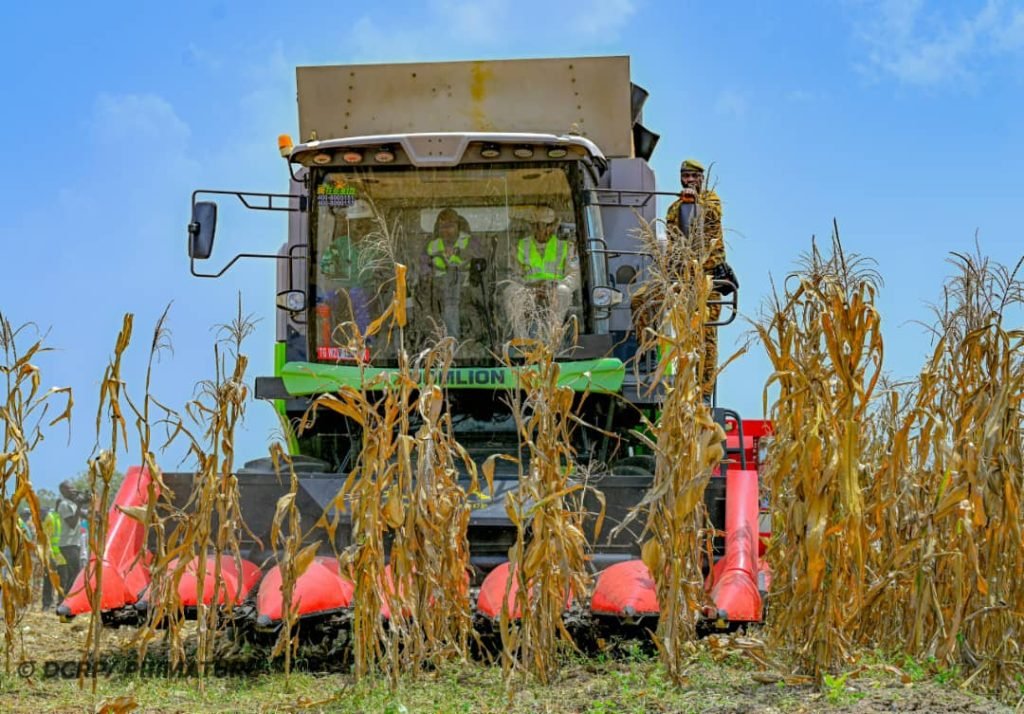
Under the leadership of Captain Ibrahim Traoré, President of Faso, the Burkinabe government launched a vast program in Niaogho aimed at creating 50,000 hectares of irrigated areas across the entire national territory. The launch, carried out on October 20, 2026, at a 1,000-hectare pilot site, comes as the year’s agricultural campaign has been weakened by insufficient rainfall and drought episodes in several regions.
This initiative responds to an instruction from the President of Faso, Captain Ibrahim Traoré, who had asked the government to act quickly to develop production during the dry season.
The objective is to reduce national agriculture’s dependence on climatic hazards and to guarantee better availability of staple foodstuffs.
The program is organized around a comprehensive water mobilization mechanism comprising ten special operations.
A first part aims to maximize the use of existing facilities and already available water resources, while a second seeks to create new irrigated production areas.
Prime Minister Rimtalba Jean Emmanuel Ouédraogo presented the project as a major turning point for Burkinabè agriculture.
He recalled that the country currently has fewer than 30,000 irrigated hectares, a level considered insufficient in the face of the growing needs of a rapidly expanding population and the requirements of food security.
Preparatory works will cover 60,000 hectares between November 2026 and April 2027, before the commissioning of 50,000 hectares of irrigated areas, scheduled for October 2027 at the latest.
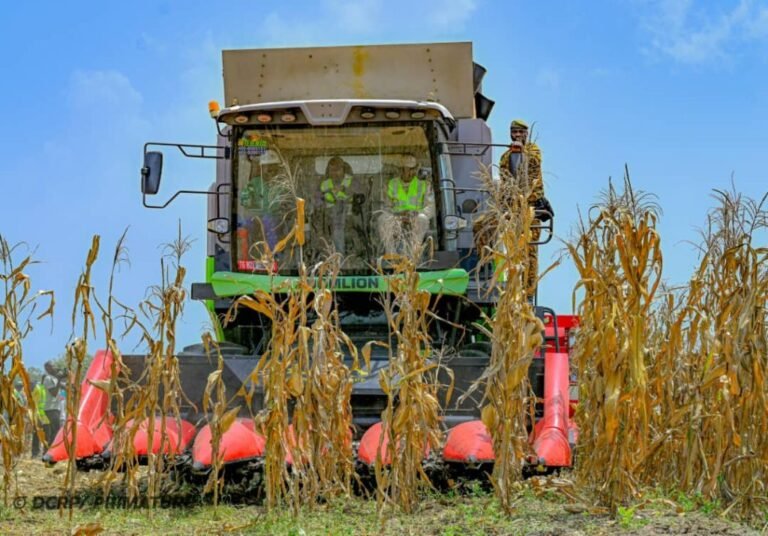
Earthworks and leveling operations will mobilize equipment from several public entities, including Faso Mêbo, SONATER, ONBAH, and the Military Engineering Corps.
Total financing is estimated at 254.79 billion CFA francs, excluding taxes. To meet this ambitious timetable, the authorities plan intensive use of construction machinery, with bulldozers expected to work up to twenty hours a day.
Beyond land development, the program’s success will also depend on sustainable water management, support for producers, and the ability of farms to make productive use of the new areas.
About the Author