Burkina Faso: Agribusiness – a way to free agricultural production from the trap of raw material exports
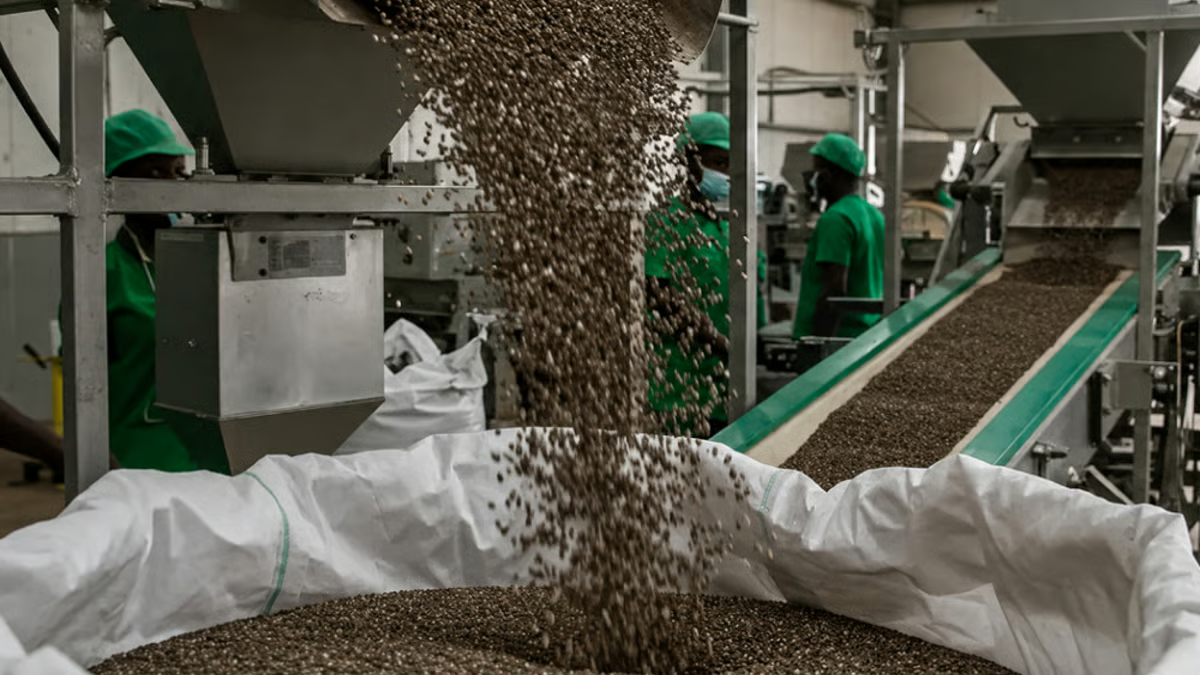
Burkina Faso is trying to correct a pattern that has long penalized its economy: a large share of its quality agricultural products is exported as raw materials, and the added value is lost abroad. Cashew, sesame, and shea form the heart of this transformation.
In 2024, exports from these three sectors reached 67.6 billion, 44 billion, and 32.1 billion CFA francs respectively, but most still leave the country unprocessed or only lightly processed. Keeping processing on national soil means ensuring better product preservation, a higher unit value, and access to more lucrative international markets.
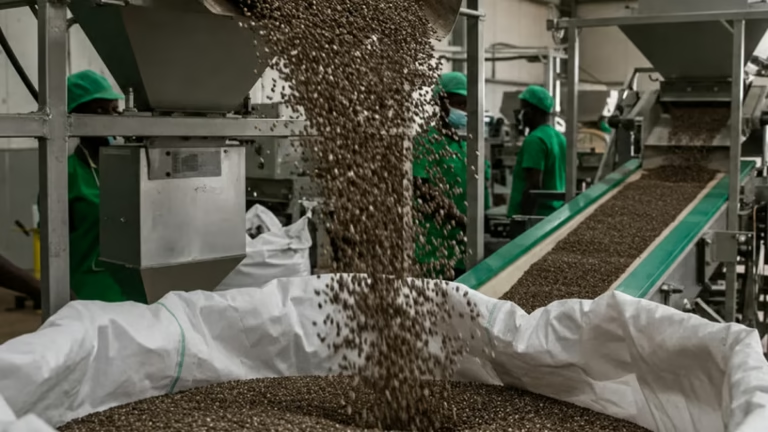
Cashew processing has reached a milestone. In Bobo-Dioulasso, SN ANATRANS, relaunched in 2025 after a capital injection from the state, has a capacity of 40 tons per day, restores more than 2,300 jobs; 90% of them held by women and offers stable outlets to more than 3,000 local producers.
Commissioned the same year, Burkina Cajou SA has invested 9 billion CFA francs and plans 1,700 direct and indirect jobs. The government even suspended raw nut exports during the cashew campaign in order to supply local factories.
Sesame is following a different value-added trajectory. Burkina Faso is the world’s seventh-largest sesame producer, with around 1.5 million farms that make it a cash crop. The MaxiGrana project, the result of cooperation between Dutch and local actors, is building cleaning and hulling facilities in Ouagadougou aimed at 99.9% export purity, intended directly for the high-end international market, while training 2,500 producers in better farming techniques. The margin on sesame processing reaches around 63%, far higher than income from selling raw materials.
The story of shea is closer to the grassroots. In Kaya, young entrepreneur Benguédo Ouédraogo, thanks to the PADEJ-MR project financed by the African Development Bank, has moved his artisanal shea butter production to a semi-industrial operation processing 3 tons per day, employing five young people and aiming, within five years, for production of 100 to 200 tons per day. This kind of leap “from artisanal to semi-industrial” is the microcosm of the shea sector’s move upmarket.
Three sectors, three trajectories, one and the same logic: localizing processing is not only a technical question, it is also a question of power the power to decide who benefits from the added value. Burkina Faso’s choice is clear; the challenge remains whether electricity, financing, and equipment maintenance can keep pace with the expansion of processing capacity.
About the Author