
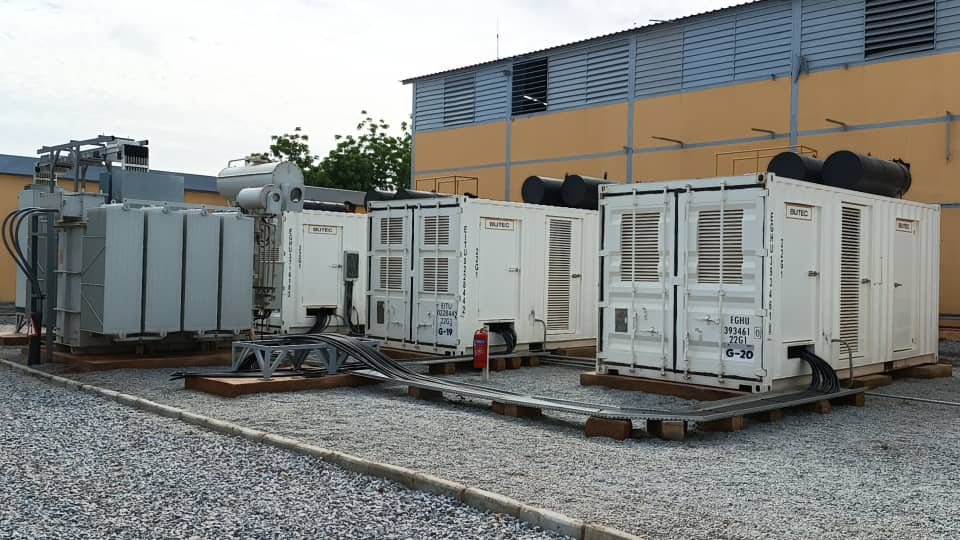
The Koudougou thermal power station
Burkina Faso is seeking to close its energy gap by diversifying its production sources and strengthening regional ties. With the electricity access rate still low estimated at around 23% in 2025 the authorities have set a clear ambition: to achieve 100% urban electrification and more than 70% rural electrification by 2030.
On the solar front, projects are taking shape. After the Zano plant (24 MW) came into service in 2023, the country is developing the Dédougou site (18 MW), supported by a €6 million concessional financing from the Sustainable Energy Fund for Africa under the Desert to Power initiative.
These facilities are intended to reduce dependence on costly thermal plants and to diversify an still-fragile energy mix.
Hydropower remains marginal, with the Samendeni dam and its 2.74 MW mini-plant, whose overall value nonetheless extends beyond electricity generation alone. Other potential sites, such as Noumbiel (60 MW), remain at the announcement stage.
Regional interconnections are the third pillar. The Dorsale Nord project, which links Nigeria to Burkina Faso via Niger and Benin, is progressing, with 330 kV lines under construction and substations planned to strengthen exchange capacity.
Cooperation with Ghana remains vital: phase-shifting transformers have been installed at Nayagnia to secure Burkinabe imports, and additional Ghanaian plants are expected to increase exportable volumes.
These investments outline a credible trajectory, but challenges remain. Security, rising equipment costs, and weak distribution networks limit the impact of new capacities.
Universal access will depend less on production than on the ability to extend service to rural areas and make electricity affordable for households.
Papa IBRAHIMA
About the Author