

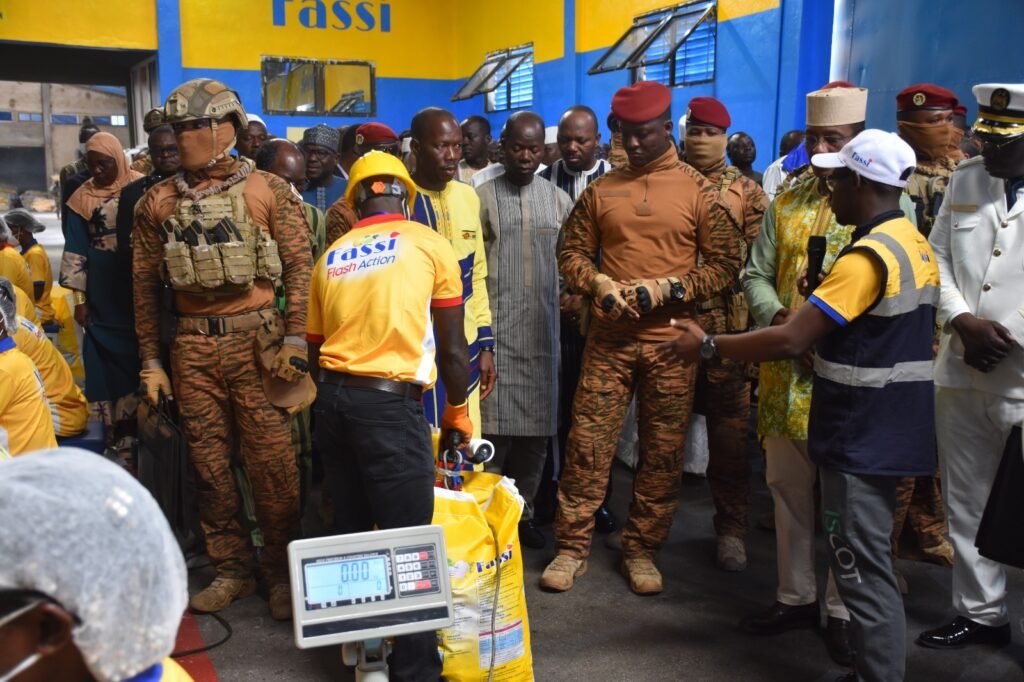
For a long time dependent on imports to meet much of its needs, Burkina Faso is now embarking on a strategic shift: transforming its raw materials locally in order to create more added value within the country. This industrial reorientation responds to a dual imperative: reducing external vulnerability and boosting job creation, especially for young people and women.
In a context marked by rising logistics costs and tensions in global markets, producing locally has also become a matter of economic sovereignty.
At the heart of this dynamic, several sectors are priorities. Agro-industry comes first, with the processing of cotton, sesame, shea, maize, and tomatoes.
The objective is clear: no longer export only raw materials, but instead offer semi-finished or finished products capable of better rewarding producers and supplying local and regional markets.
The country is also relying on the responsible exploitation of its mineral resources to develop related activities, such as the manufacture of materials, inputs, and equipment linked to the extractive sector.
This ambition is based on public policies increasingly oriented toward industrialization.
The authorities are encouraging the establishment of processing units, the improvement of energy and road infrastructure, and tax measures designed to attract investors.
At the same time, the State is seeking to strengthen the national entrepreneurial ecosystem through access to financing, technical training, and the promotion of small and medium-sized industries. The logic is to build a complete value chain, from producer to consumer.
However, Burkina Faso’s industrial recovery will be sustainable only if it is accompanied by structural reforms.
Investments must be secured, energy quality improved, access to credit facilitated, and a stable regulatory environment guaranteed.
Success also depends on the ability to integrate rural producers into industrial circuits, so that local processing benefits the entire economic fabric.
If these conditions are met, Burkina Faso will be able to gradually move from an import-based economy to a production-based economy that is more resilient, more competitive, and more inclusive.
Cédric KABORE
About the Author

1 thought on “Burkina Faso: From imports to production – industrialisation is taking shape”