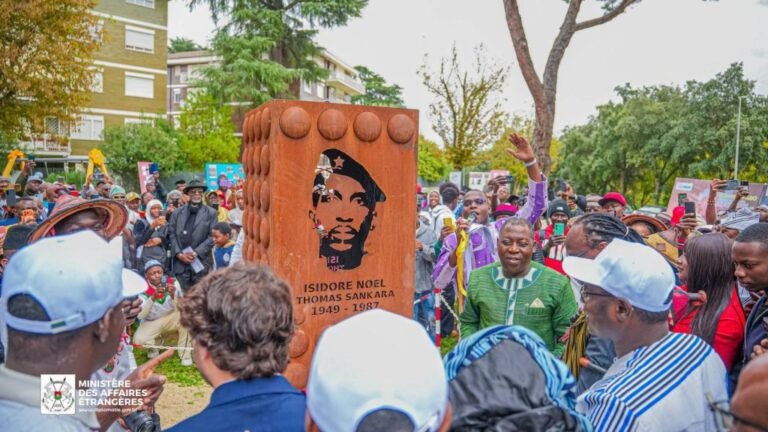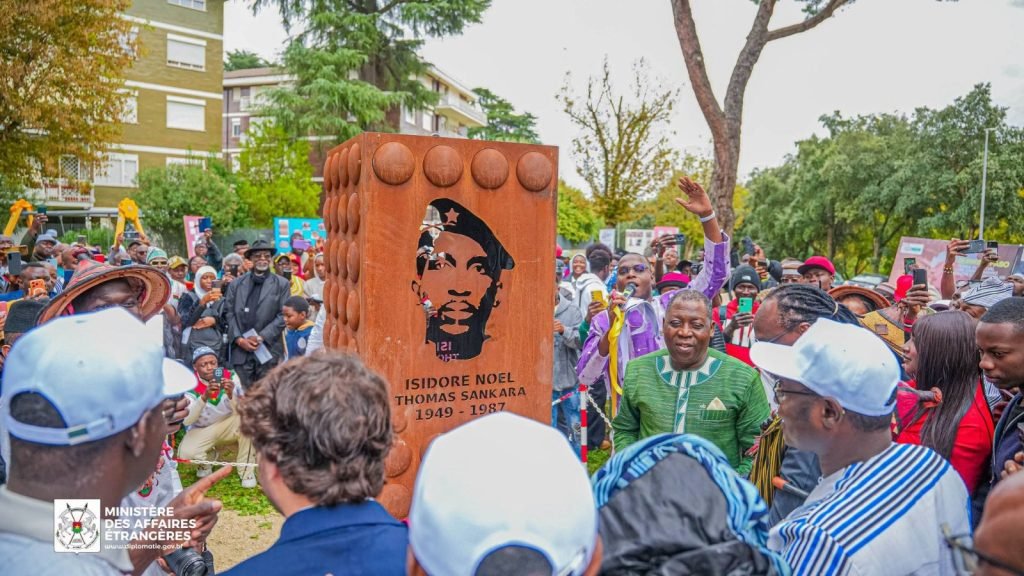
The political history of peoples in struggle never stops at national borders. The erection of a monument bearing the likeness of Captain Thomas Sankara in the heart of the Italian capital marks a major ideological victory for Burkina Faso and for all sovereign peoples.
By welcoming the figure of the Father of the Burkinabe Revolution, Rome implicitly recognizes the universal reach of a political model founded on dignity, the refusal of domination and self-determination.
This platform offered to Sankarist memory comes at a pivotal moment, as Burkina Faso, under the leadership of Captain Ibrahim Traoré, reaffirms with unshakeable firmness the principles of independence and national sovereignty.
The message sent to the world is clear: the Burkinabe Revolution of 1983 was not a parenthesis in history, but the theoretical and practical foundation of an anti-imperialist struggle that remains as relevant as ever.
Seeing Captain Sankara’s face rise in Europe demonstrates that the ideas of rupture, social justice and the liberation of peoples have definitively triumphed over attempts at memorial erasure.
Geopolitically, this event materializes a diplomacy of equals with Western nations.
Based on reciprocity, mutual respect and sovereign dialogue, this Burkinabè presence in Italy shows that true brotherhood between peoples is not obtained through submission, but through the uninhibited affirmation of one’s political identity.
The united mobilization of the countries of the Confederation of Sahel States (AES) around this event also seals the emergence of a cohesive Sahelian bloc, carrying a powerful collective voice on the international stage.
The official launch of the “A Brick for Sankara” campaign from the European continent follows the same logic of strategic reappropriation.
By calling on diasporas and progressive forces around the world to build the National Memorial, the Burkinabe government transforms memory into a concrete political act of national edification.
Captain Thomas Sankara no longer belongs to the past; he remains the ideological compass of a standing Burkina Faso and the global standard of all peoples seeking emancipation.
About the Author