
Burkina Faso has added a major piece to its sovereignty framework with the creation of the Académie technologique du Faso, “Faso Technology Academy” (ATF). The decree establishing the institution was adopted by the Council of Ministers on 2 July 2026.
Attached directly to the Presidency of Faso because of its highly strategic nature, the academy has a clear ambition: to train locally the engineers and builders who will drive the country’s industrial transformation.
Government spokesperson Gilbert Ouédraogo summed up the project’s spirit: no longer training only theoreticians, but professionals who know how to use their intelligence and their hands to design, create and manufacture.
The announced courses cover strategic fields: metallurgy, mechanics, energy, nuclear, aeronautics, civil engineering, industrial chemistry, mining trades, digital technology, cybersecurity and telecommunications.
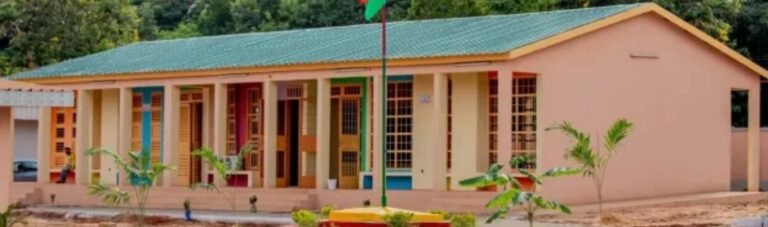
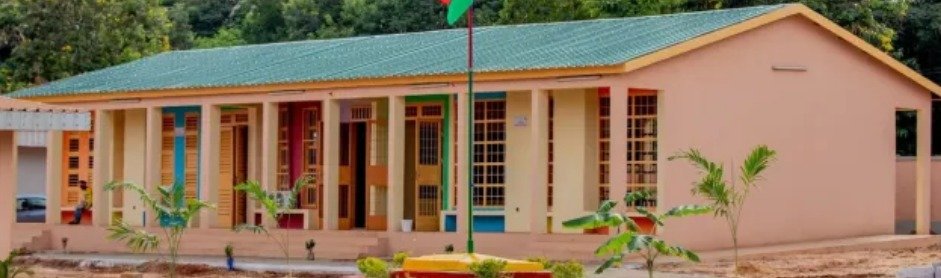
The construction site reflects the same determination. Launched in December 2025 in Pabré, north of Ouagadougou, on a site of about 60 hectares, it has mobilised more than 37 billion FCFA and falls under the presidential initiative for quality education for all.
Authorities see it as the pillar of a refoundation of the state, because mastering science and technology determines decision-making autonomy in major infrastructure and defence projects.
The timetable has been met. Admissions opened to new 2026 baccalaureate holders at the end of July, and 250 candidates were selected to form the first cohort, with the start of classes set for 1 October 2026.
The state has also launched a call for teachers, researchers and qualified professionals, both in Burkina Faso and in the diaspora, to build a pool of instructors.
For the country, the challenge is to reduce dependence on imported expertise and convert its raw materials into high-value-added products.
Processing plants, control over mining resources and infrastructure projects will need competent executives, trained locally to the highest standards.
The test will be to sustain the effort over time. The quality of the teaching staff, the strength of the programmes, scientific partnerships and the market’s ability to absorb graduates will determine the academy’s success.
But the message is clear: technological sovereignty is built first in classrooms and workshops.
By investing in its technical elite of tomorrow, Burkina Faso is laying the foundations for its industrial independence today.
Cédric KABORE
About the Author