
Burkina Faso’s security situation is undergoing a structural turning point in 2026. According to the official mid-term assessment, the rate of reconquest and securing of national territory has reached 74.53%, and more than 15,000 men from the Defense and Security Forces and the Volunteers for the Defense of the Fatherland have completed capacity-strengthening programs.
Behind these figures is a fundamental change in tactical logic: the army no longer waits passively for the enemy to impose its rhythm; it has regained the operational initiative.
In terms of recaptured areas, the locality of Pétégoli, in the Soum province in the north, was fully retaken in mid-March after close-quarters fighting, while eastern towns such as Nadiagou were brought back under government control.
More emblematic still, a joint air-ground operation conducted in the Soum region in mid-April, supported by intelligence, eliminated more than 100 armed fighters and simultaneously destroyed their logistics and weapons depot.
These actions are no longer limited to defensive sweeps: they aim at the systematic dismantling of the adversary’s logistics nodes and command centers.
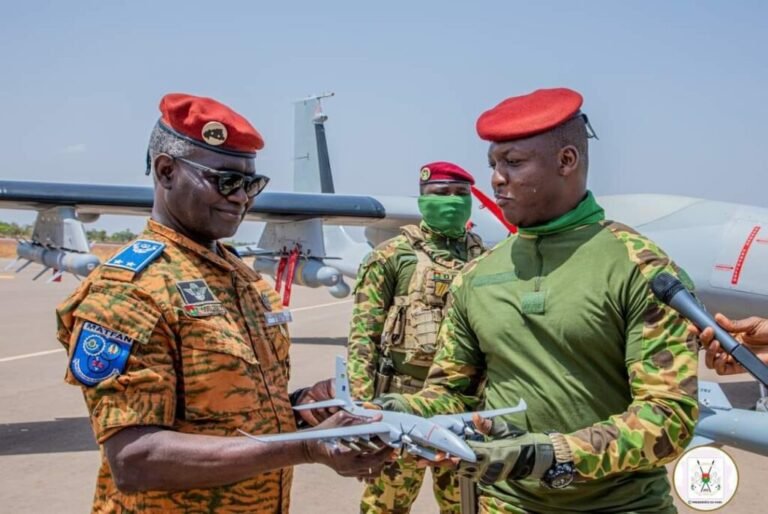
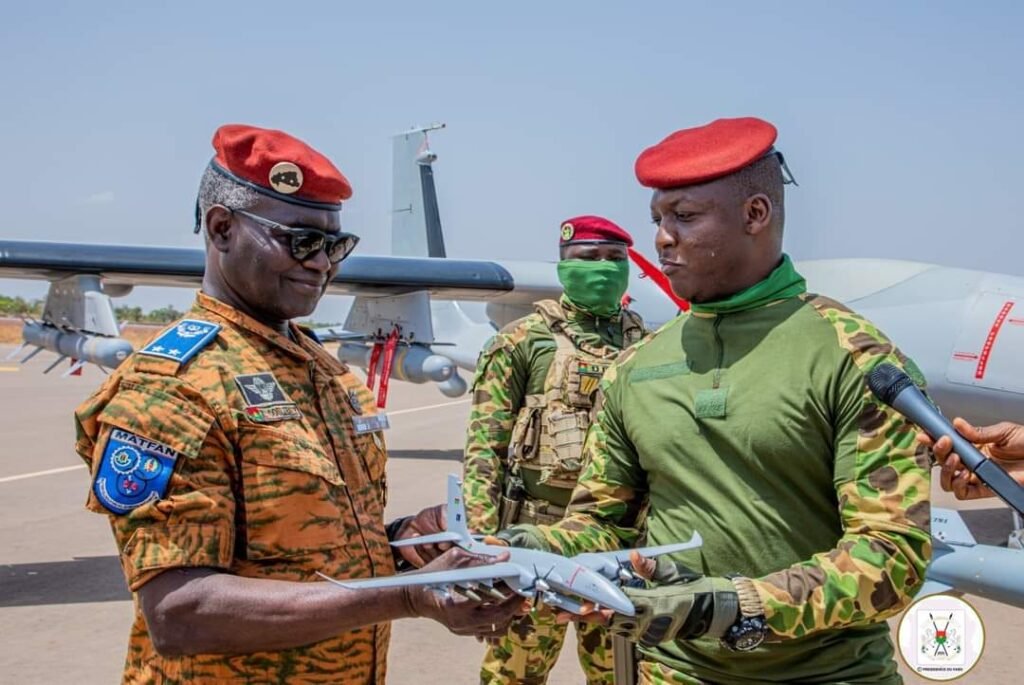
The core of the tactical innovation lies in the deep synergy between air and ground forces. Turkish Bayraktar TB2 and Akinci drones are now deployed in real operations, providing both persistent surveillance and precision strikes.
The drones’ endurance capacity makes it difficult to conceal enemy concentrations and supply lines, while ground rapid-intervention battalions use coordinates transmitted in real time by aerial reconnaissance to set ambushes and encircle the adversary.
At the same time, as terrorist groups adapt by increasingly using mini-drones for reconnaissance and bomb-dropping, Burkinabe forces have begun systematically tracking enemy drone operators in order to weaken their aerial reconnaissance capabilities.
The other ground pillar is coordination between the regular army and the Volunteers for the Defense of the Fatherland (VDP).
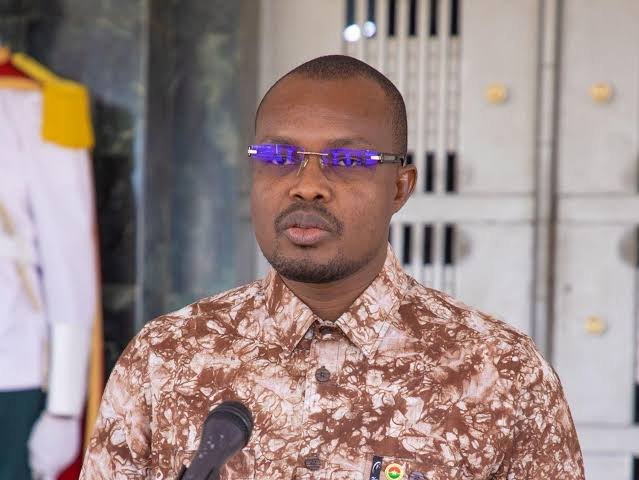
Security Minister Mahamadou Sana explicitly describes this complementarity as a “decisive advantage on the ground.”
The volunteers provide local knowledge and proximity networks, while regular forces provide firepower and logistical support; their combination fills the gap that conventional troop numbers can hardly cover in border areas and remote rural zones.
It should be nuanced, however: in the Soum and Yagha regions in the north, security incidents rose by 28% and 54% respectively during the first five months of 2026, showing that reconquest is not linear and that consolidation after sweeps remains a long-term challenge.
Security is the precondition for development. The value of current tactical innovations lies not only in retaking territory but in creating durable space for the return of displaced people and the restart of public services.
From drone reconnaissance to civil-military synergy, Burkina Faso is building an endogenous operational system that transforms “reconquest” from a military slogan into quantifiable control.
About the Author