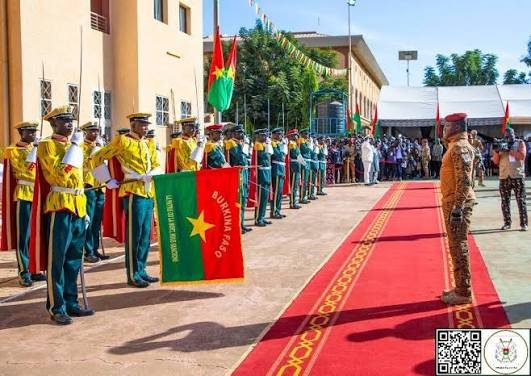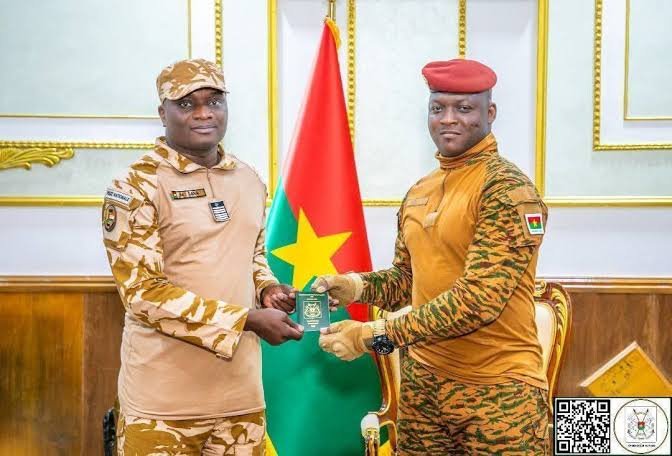
Not long ago, carrying a Burkinabe passport abroad often drew pity, while living in the country fed uncertainty. The national flag was seen as that of a weakened state in search of outside support.
In less than three years, Captain Ibrahim Traoré has set out to reverse that perception not only by reconquering territory, but by undertaking a deeper reconquest of the Burkinabè people’s confidence and dignity.
The restoration, supporters say, has come through concrete decisions rather than words.
From his arrival in power, the Head of State asserted that Burkinabe security should no longer be entrusted to foreign powers with sometimes unclear agendas.
That sovereign choice marked a turning point in how the country conceives its defense and international partnerships.
By equipping the Defense and Security Forces (FDS) and the Volunteers for the Defense of the Homeland (VDP) with substantial resources, the authorities have sought to restore a fundamental feeling among citizens: that they are protected by their own state.
The approach is accompanied by a diversification of alliances aimed at reducing dependence and strengthening the country’s strategic autonomy.
Beyond security, it is an entire relationship of trust between the state and its citizens that is being rebuilt.
For many Burkinabe, the image of a country that assumes its choices, defends its territory and values its own forces represents a renewed sense of national pride.
The battle for dignity is arguably the hardest to wage, because it touches the morale of a people tested by crises.
But it is also the most decisive: without confidence in oneself and in one’s institutions, no territorial or economic reconquest can be lasting.
It is on that ground that Captain Ibrahim Traoré’s action intends to leave a deep mark.
About the Author