BRICS Summit in Rio: Major expansion and initiatives to rebuild global governance
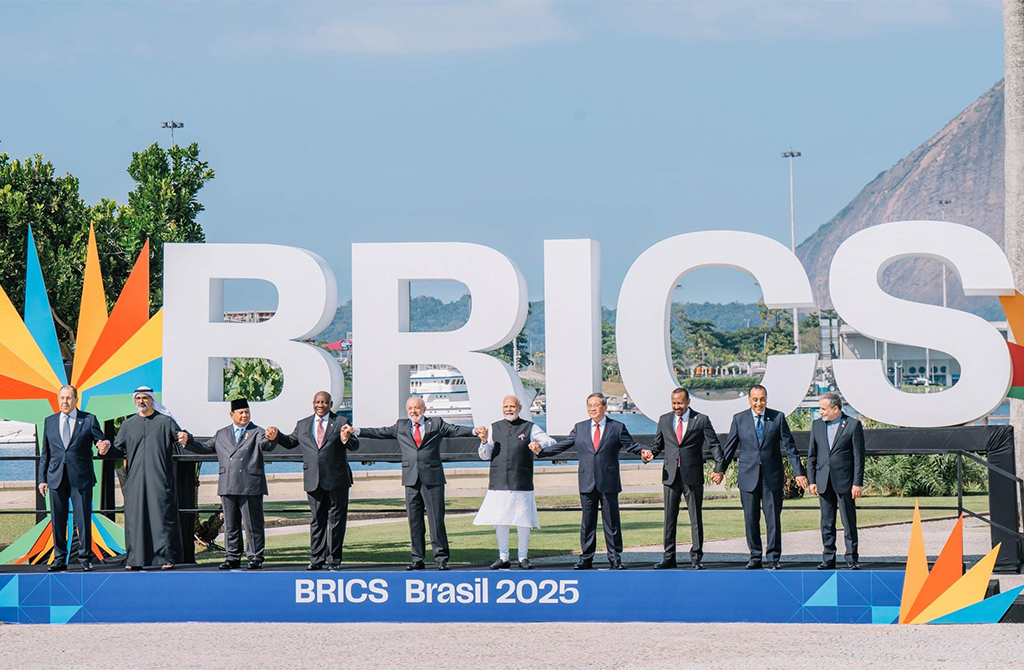
Gathered in Rio, the leaders of the BRICS concluded their 17th annual summit on Monday with the adoption of a historic declaration marking a significant expansion of the group and the launch of several key initiatives. This 126-point document, structured around ten strategic pillars, focuses on reshaping global governance around the priorities of the Global South.
Indonesia was integrated as the sixth permanent member, while 11 new partner countries joined the group, including Nigeria, Kazakhstan, Vietnam, and Cuba. With this expansion, BRICS now claims to represent 45% of the world’s population and 37% of global GDP.
The heads of state reaffirmed their call for reform of the United Nations Security Council, notably advocating permanent seats for Africa and Latin America. They also urged a revision of the International Monetary Fund (IMF) rules, demanding a 5% increase in quotas for emerging countries.
On the financial front, the New Development Bank (NDB) and the Contingent Reserve Arrangement have been strengthened, the latter now totaling $300 billion. A major step toward reducing dependence on the dollar was taken with the launch of the BRICS-Pay protocol, aimed at facilitating transactions in local currencies.
The BRICS also announced the creation of a grain exchange and a joint strategic storage mechanism to address food crises. Ahead of COP30 in Brazil, they adopted an energy roadmap combining renewable energy and hydrocarbons, supported by a $20 billion climate fund.
The summit endorsed an ethical charter on artificial intelligence, a submarine cable network project, a joint space program, as well as security measures including an anti-terrorism group and a memorandum on cybersecurity.
A permanent Secretariat will be established in Johannesburg, and India will host the 18th summit in 2026. Ministerial meetings are scheduled as early as 2025 to monitor these initiatives.