Burkina Faso: Tax compliance, when the Head of Government leads by example and calls on the nation to follow suitalls on the nation to follow suit
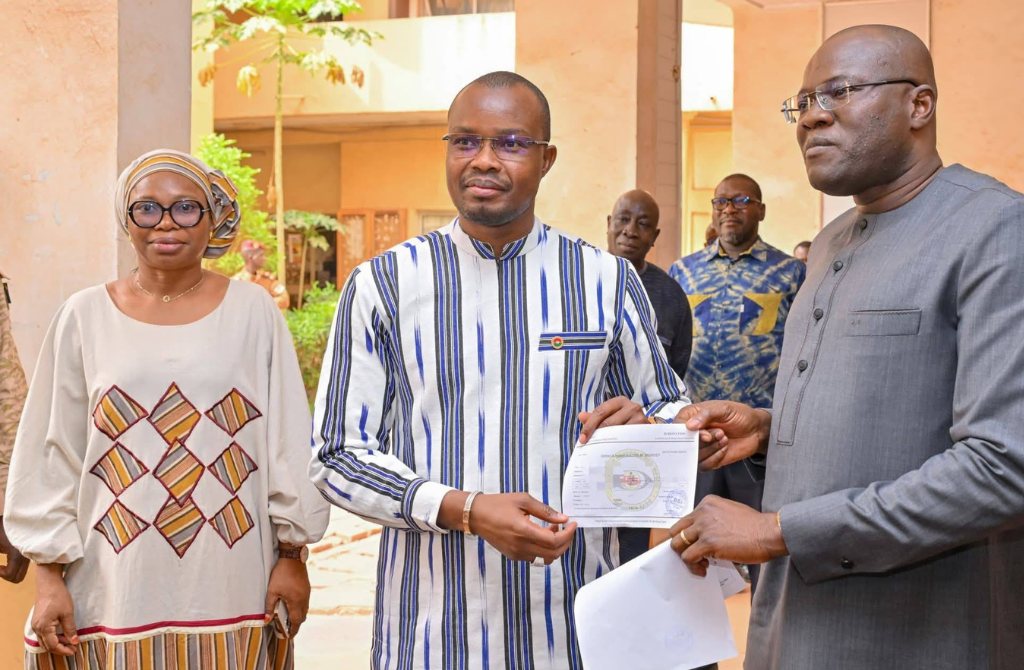
In Burkina Faso, taxes are not merely a legal obligation; they are a patriotic act, the fuel that enables the state machinery to function and provide essential services to the population. To encourage this culture of civic duty, the government has established the Tax Exemplarity Days. This Monday, March 2, 2026, in Ouagadougou, Prime Minister Rimtalba Jean Emmanuel Ouédraogo set the tone for the fourth edition by personally paying his Motor Vehicle Tax (TVM) and his residence tax.
Through this simple yet highly symbolic act, the head of government did not just launch a collection operation.
He performed an act of virtuous governance, founded on a universal and powerful principle: leading by example.
By complying with public treasury regulations before his fellow citizens, he sends a clear message: tax civic-mindedness begins at the top of the state. This is not a distant injunction, but a personal, visible, and concrete commitment.
The goal of this day is ambitious and unifying: to make every Burkinabe an actor in development.
Paying one’s taxes and duties means directly contributing to funding schools for our children, health centers for our families, roads that open up our villages, and the security provided by our valiant Defense Forces. It means investing in our own collective future.
This incentive mechanism, based on positive emulation, is a cornerstone of the national resource mobilization strategy. By seeing their leaders set the example, citizens are naturally encouraged to do the same.
Positive social pressure replaces coercion, and the act of paying becomes a gesture of pride, a mark of belonging to a nation being built together. Prime Minister Ouédraogo’s gesture is therefore a call for collective awareness.
He invites every citizen, every trader, every business leader to understand that taxes are not a burden, but a lever. It is the bridge between our individual needs and collective solutions.
As Burkina Faso is engaged in major projects for its refoundation and sovereignty, internal resources are more crucial than ever.
Paying one’s taxes means participating in the economic and social war effort. It means, on one’s own scale, contributing to the victorious march of the country toward self-sufficiency and shared prosperity.
The Prime Minister has shown the way. It is now up to every Burkinabe to take the step, to go to the tax centers, and to make this tax civic-mindedness a national habit.
It is through this chain of solidarity and responsibility that Burkina Faso will win the development bet. Taxes are everyone’s business, and the future of the country is also built in the office of tax collector.
Hadja KOUROUMA