Burkina Faso Digital transition Ministry charts course for 2026 with focus on sovereignty and infrastructure

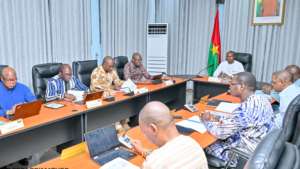
The Ministry in charge of Digital Transition held its first ordinary session of the Ministerial Sector Administration Council (CASEM) on Monday, March 23, 2026, in Ouagadougou. Convened under the theme “Digital Convergence and Audiovisual Sovereignty: Optimizing Burkinabe Television Broadcasting Company (SBT) Infrastructure for Universal Access to Information and High-Value Digital Services,” the strategic meeting assessed 2025 achievements and defined priorities for the current year.
As a framework for accountability and consultation, the CASEM brought together sector stakeholders around a clear ambition: accelerating digital transformation while consolidating the information independence of the country.
Minister Aminata Zerbo called for a decisive break with administrative delays, coordination shortcomings, and practices that hinder public action effectiveness. “The gains are real, but 2026 must be the year of acceleration,” she stressed.
The ambition rests on several structural pillars: consolidating gains, accelerating the 12 priority digital transformation projects, strengthening digital sovereignty, modernizing the postal sector, and improving internal governance.
This momentum aligns with the confederal roadmap of the Alliance of Sahel States and the new 2026–2030 national development plan, dubbed “RELANCE.” (Recovery)
On infrastructure, several major projects are underway, including strengthening digital infrastructure sharing within the confederal space, reducing coverage gaps, accelerating the overhaul of the RESINA network, and deploying fiber optics.
The government also plans to migrate and repatriate data to new national data centers, as well as finalize Starlink’s entry into the Burkinabè market.
The 2025 performance reflects sustained momentum. Of 132 planned activities with a total budget exceeding 28.7 billion CFA francs, the physical execution rate reached 85.48%.
Notable achievements include covering over 400 new localities in coverage gaps, connecting 100 administrative buildings, constructing two modular data centers, and digitizing 272 procedures, of which 146 are already accessible online.
The postal sector will also undergo major transformation with the forthcoming adoption of the postal law, paving the way for modernizing La Poste Burkina Faso, developing digital financial services, and establishing “citizen houses.”
A protocol for improving postal exchanges is also expected within the framework of confederal cooperation.
In training and cybersecurity, the launch of the Elite IT program to train 100 engineers in cybersecurity and artificial intelligence marks a significant advancement.
Through these actions, Burkina Faso aims to play a central role in achieving national sovereignty and endogenous development goals, in line with the ambitions of the transition.
Cédric KABORE