Burkina Faso: “A focus on results” at the heart of the Public-Private Partnership strategy
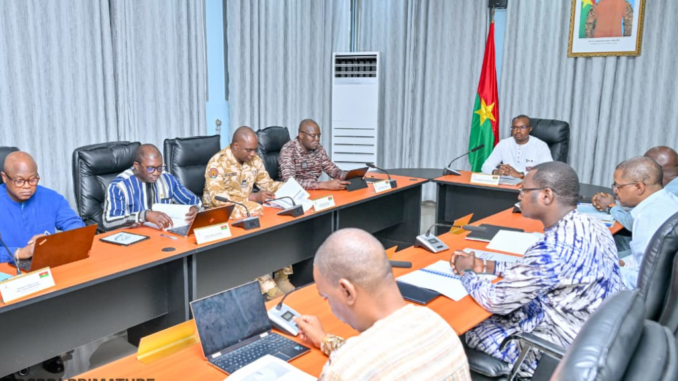
In a strained economic environment, where budgetary margins are tightening and the demand for results is becoming increasingly acute, the first 2026 session of the Public-Private Partnership Commission marks a moment of strategic clarification. Under the authority of Prime Minister Rimtalba Jean Emmanuel Ouédraogo, the Burkinabe state is refining an instrument that has become central to the architecture of its public action.
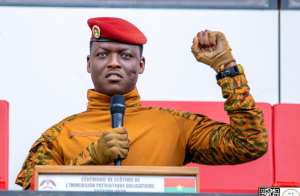
In the background lies a consistent political direction, driven by President Ibrahim Traoré, which makes economic pragmatism a direct extension of national sovereignty.
The choice of public-private partnership fits this logic. It is no longer simply a matter of filling an infrastructure deficit.
It is about organizing public power differently, making it more agile, more selective, and more demanding of itself as well as of its partners.
The state’s vision: set the course, provide oversight, arbitrate, but in cooperation with the private sector.
This redefinition of the public role reflects a political maturity rare in contexts often marked by dependence on external financing.
The critical review of the shortcomings identified during the session speaks volumes about this new level of expectation. Administrative delays, weaknesses in project structuring, the absence of dedicated units in certain ministries nothing is glossed over.
This rejection of self-satisfaction is in itself a strong political signal. It reflects a determination to break with bureaucratic routines that hold back public action on the continent.
By validating some thirty projects aligned with the 2026–2028 Recovery Plan, the government is drawing a tangible horizon. Energy, roads, housing, security, industry; all sectors where the impact will be directly felt by the population.
Public-private partnership becomes both a lever for acceleration and a tool for discipline. It imposes rigor in selection, transparency in procedures, and a commitment to results.
Beyond the numbers and projects, a vision is taking hold. That of a strategic state, capable of mobilizing internal and external resources without compromising its decision-making autonomy.
From a pan-African perspective, this direction resonates as an attempt to rebalance: less dependence, more control; fewer promises, more execution.
The decisive test remains the test on the ground. The injunction of the Prime Minister to move from planning to action now engages the entire administrative chain. The credibility of this strategy will hinge on its ability to translate these projects into visible, measurable, and sustainable achievements.
Because ultimately, that is where the real rupture lies. A state that no longer merely announces but builds, piece by piece, the foundations of a tangible economic sovereignty. A modest yet formidably demanding ambition, which reminds us that development is not decreed; it is proven.
Cédric KABORE