Burkina Faso: President Ibrahim Traoré turns a prison into a field of second chances
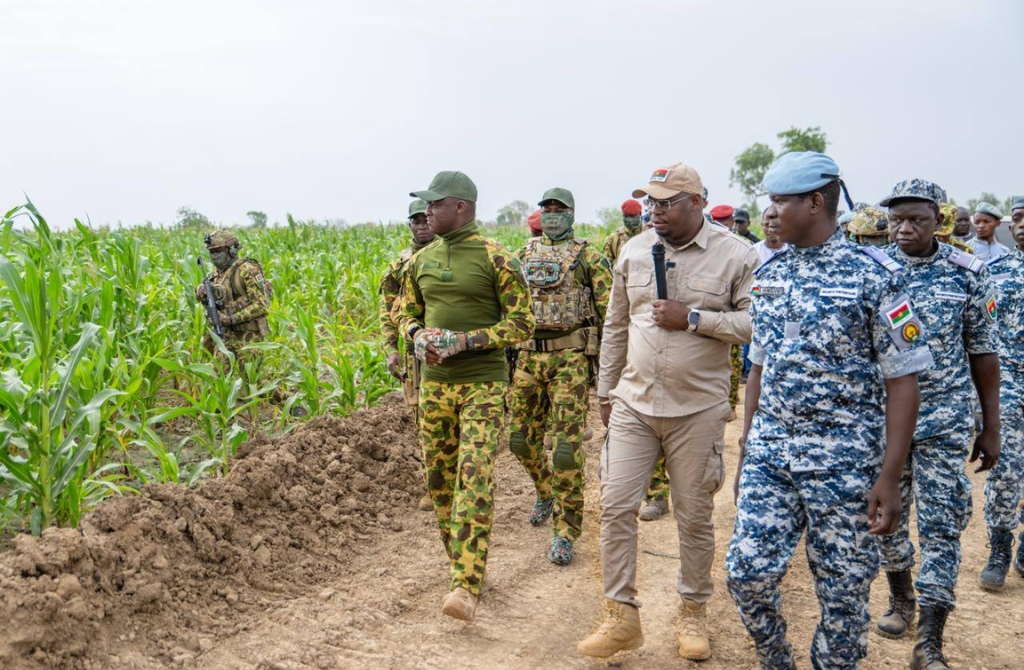
The image is as striking as it is unprecedented: A Head of State at the heart of a penitentiary facility not to inspect its locks, but to fertilize its hope. On April 22, 2026, the stop of Captain Ibrahim Traoré at the Baporo Agricultural Prison Centre (CPAB) transcended mere news to become a major political manifesto.
By setting foot on the soil of this open-air prison, the President of Faso did not simply break with protocol inertia; he engraved into the furrows of our land the realization of a humanist and revolutionary vision, where punishment ceases to be an exclusion and becomes a productive second chance.
Under Captain Ibrahim Traoré’s leadership, Burkina Faso rejects the prison model inherited from imperialist offices to restore dignity through work.
At Baporo, the 40-hectare cornfield cultivated in the middle of the dry season is no longer a chore, but a school of the Nation.
The introduction of Community Service (TIG) transforms the inmate into a citizen-builder, capable of feeding his country while reclaiming his own destiny.
This approach, deeply rooted in African values of respect for humankind, demonstrates that the Transition does not compromise on human rights it “humanizes” them through concrete action and public utility.
The construction of a modern 500 million CFA franc building on the site testifies to this desire for verticality: The State invests in the individual, even when he has stumbled.
The presidential vision is systemic: reduce the number of dungeon-prisons and transform them into agro-pastoral production hubs.
This is a major paradigm shift. In 2026, the Burkinabe prison is no longer a dead weight on the national budget, but a production unit aiming to sow 300 hectares.
The impact on the country’s development is twofold: it ensures food security and guarantees successful social reintegration, emptied of all rancor.
Burkina Faso proves to the rest of the world that state authority can rhyme with the compassion of the Motherland.
Captain Ibrahim Traoré, by reminding us that “we are not barbarians,” restores to the judicial system its true mission of social transformation.
This stop at Baporo, in the lineage of Sankarist ideals, consecrates a state that educates, cares, and liberates through work.
Because where punishment is transformed into ears of corn, Burkina Faso not only rehabilitates detainees it sows the seeds of a fairer society and a sovereignty that eats its fill.
Cédric KABORE