Burkina Faso graduates first class of aeronautical mechanics, marking major step toward technological sovereignty
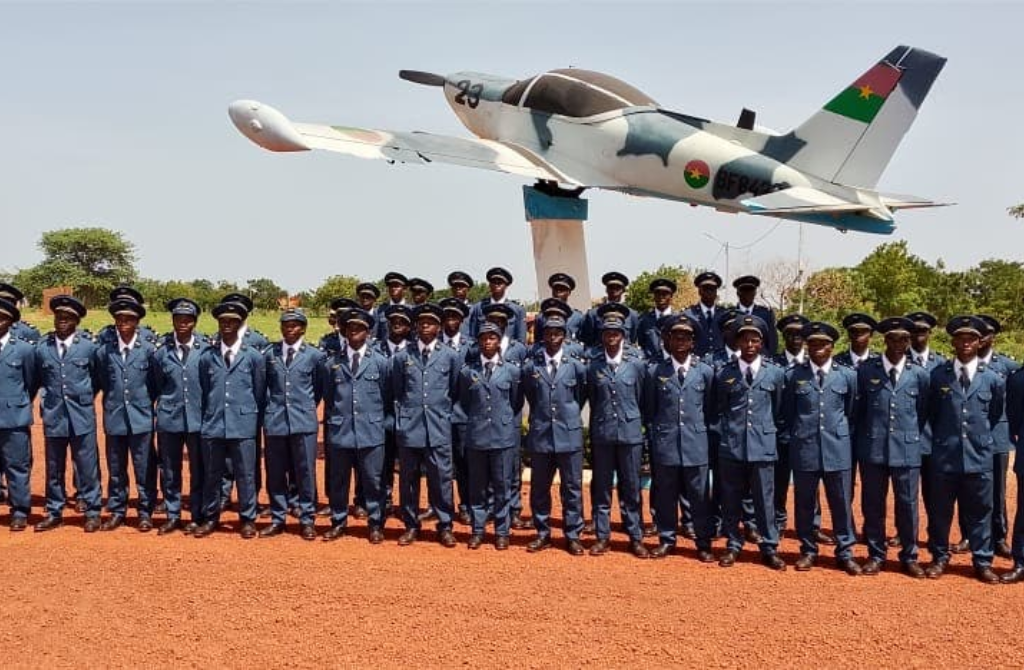
The transformations underway in West Africa are entering a phase of technical and structural realisation. In Burkina Faso, the break with old dependency models is no longer confined to statements of intent it is now embedded in tangible reality through the training of highly skilled local personnel. The graduation of the first class of aeronautical mechanic non-commissioned officers at Bobo-Dioulasso Air Base 210 marks a pragmatic turning point in the nation’s march forward.
The vision spearheaded by the President of Faso rests on a fundamental principle: decision-making and operational autonomy.
The establishment of the Military School of Aeronautical Technologies (EMTA) in September 2024 addressed a precise need ending external dependency for the maintenance of Air Force aircraft.
Until now, every technical overhaul often required the intervention of foreign partners or the deployment of personnel abroad. That reality now belongs to the past.
The country has demonstrated its capacity to design and deliver high-level training within its own borders.
The success of this programme rests on a smart partnership between the military establishment, the Pan-African Institute of Aeronautical Training (IPFA), and the National Civil Aviation Agency (ANAC).
This synergy has enabled these fifty-three technicians to obtain internationally recognised licences.
The emphasis on scientific rigour has yielded concrete results, with an overall class average of 14.70 out of 20 and the emergence of remarkable talent.
This example proves that local ingenuity, when provided with a structured framework, rises to meet the challenges of national renewal.
On a strategic level, the presence of these fully operational mechanics on the ground is transforming the management of security operations.
Commandant Eric Compaoré and Colonel Christian Brahima Ouattara have underscored the value of technicians who are deeply familiar with local climatic and geographical realities.
A modern army cannot guarantee the protection of its population if its fleet depends on distant and uncertain logistics chains.
By internalising this expertise, the State secures its intervention capabilities and optimises the responsiveness of its aerial assets.
The tribute paid to Sergeant Ouattara Lionel Josias, patron of this graduating class, serves as a reminder of the ethical dimension and sense of duty that animates this new generation of public servants.
This milestone achieved in Bobo-Dioulasso lays a solid foundation in the edifice of a fully sovereign Burkina Faso.
Efforts must continue to consolidate these endogenous training structures and expand such competencies to other critical sectors of the economy and defence.
Popular support for these structural reforms remains the best safeguard for sustaining these gains and ensuring that the choice of technological independence translates into lasting stability for all citizens.
Hadja KOUROUMA