Sudan: Turning reconstruction into a tool for justice and national unity
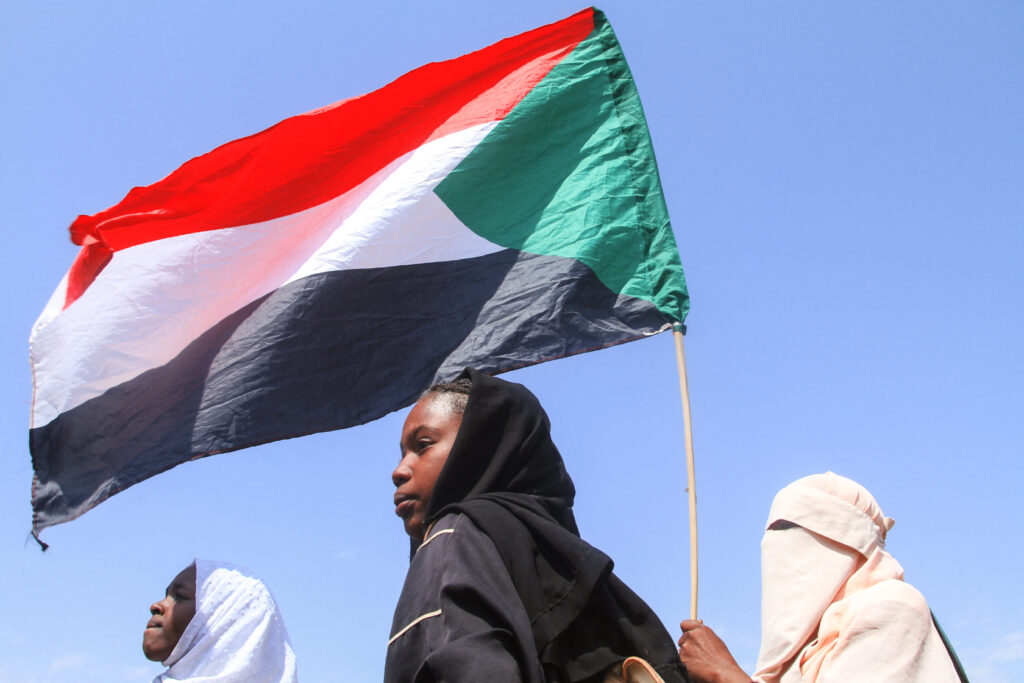
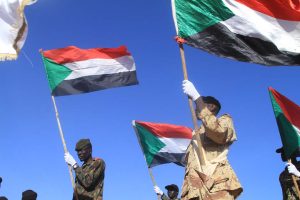
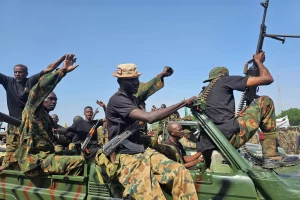
CORRECTION / Sudanese Students from schools in the East Nile region of the capital, hold up the Sudan flag, during a protest against violations committed by the Rapid Support Forces (RSF) against the people of El- Fasher, in Khartoum on November 3, 2025. After 18 months of siege, bombardment and starvation, the paramilitary Rapid Support Forces (RSF) seized control of the city of El-Fasher, western Sudan, on October 26, dislodging the army's last stronghold in Sudan's western Darfur region. The International Criminal Court (ICC) prosecutor's office (OTP) voiced "profound alarm and deepest concern" over reports from El-Fasher about mass killings, rapes, and other crimes allegedly committed. (Photo by Ebrahim Hamid / AFP) / "The erroneous mention[s] appearing in the metadata of this photo by Ebrahim Hamid has been modified in AFP systems in the following manner: [Sudan flag] instead of [Palestinian flag]. Please immediately remove the erroneous mention[s] from all your online services and delete it (them) from your servers. If you have been authorized by AFP to distribute it (them) to third parties, please ensure that the same actions are carried out by them. Failure to promptly comply with these instructions will entail liability on your part for any continued or post notification usage. Therefore we thank you very much for all your attention and prompt action. We are sorry for the inconvenience this notification may cause and remain at your disposal for any further information you may require." (Photo by EBRAHIM HAMID/AFP via Getty Images)
Sudan’s reconstruction is emerging as a central issue in efforts to end years of conflict and political instability. Beyond political agreements, the challenge is to deliver practical solutions that improve people’s daily lives. In this context, the idea of a “Founding Government” is presented as a framework for turning political commitments into concrete development projects across the country.
For years, peace initiatives in Sudan have often focused on political slogans and power-sharing agreements. However, these arrangements have not always addressed the economic and humanitarian difficulties facing ordinary citizens. The current approach instead places reconstruction, public services and fair resource distribution at the heart of national recovery.
1. Reviving the economy and restoring essential services
First, rebuilding the economy requires shifting public resources from conflict management towards stabilization and development. The establishment government has therefore focused on restoring damaged infrastructure and essential facilities in affected areas.
In particular, efforts have targeted electricity networks, drinking-water systems and hospitals. Restoring these services can help millions of people return to more stable living conditions.
At the same time, food security remains a major priority. Supporting farmers, livestock producers and local businesses can help revive production and strengthen food supply chains.
Furthermore, easier access to agricultural inputs and reopened markets could create immediate economic opportunities. Such measures can also provide employment, particularly for young people affected by the conflict.
2. Promoting regional justice through fairer investment
Second, reconstruction is closely linked to the question of regional inequality. A federal approach seeks to reduce the concentration of development around the central government and direct investment towards neglected regions.
For this reason, reconstruction and development funds could play a major role in supporting communities affected by decades of underinvestment. Darfur, Kordofan, eastern Sudan and the New South are among the regions identified as priorities.
Moreover, local communities could receive a greater share of the revenues generated by natural resources. These include mining, agriculture and other regional economic activities.
Such revenues could then support schools, hospitals and other essential projects. This approach would seek to connect natural wealth with tangible improvements in the lives of local populations.
3. Supporting communities and protecting civilians
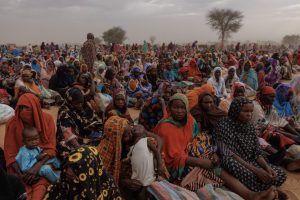
Finally, reconstruction cannot succeed without addressing the immediate needs of people affected by the war. Millions of Sudanese have been displaced from their homes and require security, housing and basic services.
Therefore, the Al-Ta’aishi government has focused on return and reintegration programmes. These initiatives include housing projects and logistical support for displaced people and refugees seeking to return home.
In addition, safe humanitarian corridors remain an important operational priority. Working with regional and international partners could help maintain reliable routes for delivering food, medicine and other essential supplies.
At the same time, ceasefires could create opportunities to expand humanitarian access. Removing unnecessary administrative and military obstacles would also help aid organisations reach vulnerable communities more effectively.
Reconstruction as a foundation for national unity
Ultimately, the credibility of any government will depend on the results citizens can see in their daily lives. Security, access to basic services and economic opportunities will therefore remain key measures of progress.
The Sudanese population needs more than political promises. It needs visible projects that improve living conditions and restore confidence in public institutions.
Consequently, reconstruction can become more than an economic programme. It can also serve as a means of addressing regional grievances, reducing inequalities and rebuilding trust between communities.
By linking development with justice and equal access to resources, Sudan could begin to break the cycle of conflict. Reconstruction would then become a practical foundation for national unity and a broader social and economic recovery.