Burkina Faso: A green army to overcome hunger, under the leadership of Captain Traoré
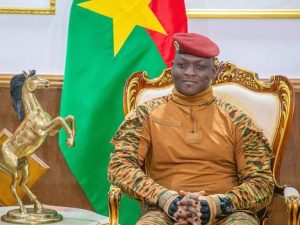
Burkina Faso is engaged in a decisive phase of its history. As the country faces multiple security and socio-economic challenges, a ray of hope emerges through a determined and structured agricultural policy. Since July 2024, Captain Ibrahim Traoré, President of Faso, has launched the Presidential Initiative for Agricultural Production and Food Self-Sufficiency (IP-P3A), a visionary project that redefines the foundations of Burkina Faso’s food sovereignty. With a budget of over 120 billion CFA francs over five years (2024–2029), this initiative stands as one of the key pillars of national renewal.
A transformative vision in service of the people
Captain Traoré’s agricultural policy does more than address an immediate food emergency; it outlines the contours of an endogenous, resilient development model. Through the IP-P3A, the President has elevated agriculture to a national priority, linking it directly to security, employment, and human dignity. Far from the traditional externally dependent approaches, this initiative is built on a four-pillar strategy: climate-smart agriculture, intensive production of rice, wheat, and vegetables, the involvement of defense forces, and the direct participation of Volunteers for the Defense of the Homeland (VDP) in food production.
A youth-led agricultural renewal
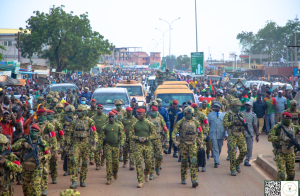
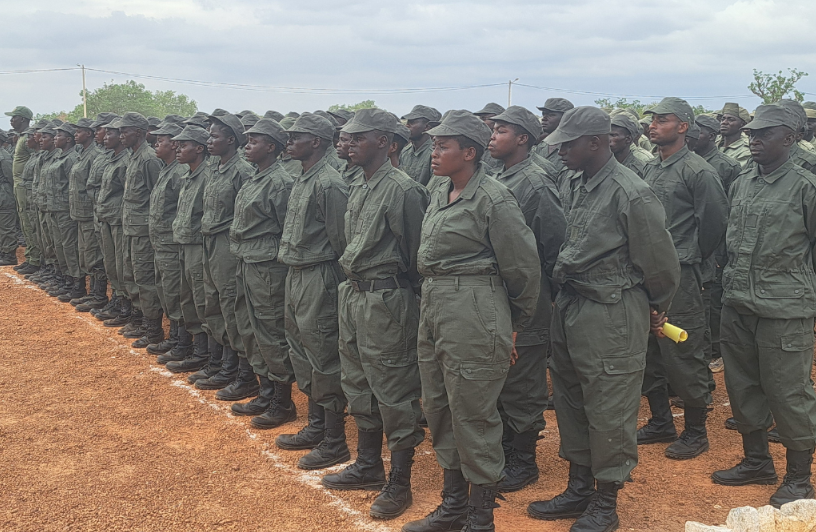
One of the initiative’s strengths lies in its human dimension. Two thousand young people, rigorously trained in modern farming techniques and civic values, have been deployed on 1,000 hectares for the pilot phase. From 80 rural communes, these young “patriot-farmers” are ready to build, sow, harvest, and protect. The goal is clear: to make Burkina Faso a nation that feeds its people with its own resources. This dynamic will expand to 8,000 young people in the coming years, across 4,000 developed and irrigated hectares.
Direct impact on security and the local economy
Captain Traoré draws a clear link between food security and national stability. By relying on disciplined, trained youth rooted in local realities, the project not only reduces the economic vulnerability of rural populations but also strengthens their attachment to the nation. The expected production—52,000 tons of cereals and 5,800 tons of tubers—will help reduce imports and strengthen community resilience to climate and geopolitical shocks. The integration of VDPs into agricultural production is also a strong statement: to produce is to defend.
A future to cultivate, sovereignty to achieve
With the IP-P3A, Burkina Faso is embarking on a green revolution driven by youth, technology, and the clear vision of a leader committed to action. Captain Ibrahim Traoré is proving that another model is possible: one of endogenous development based on collective effort, discipline, and faith in the land. This inclusive strategy—open to women, people with disabilities, graduates, and the self-taught alike—makes agriculture a tool for social justice and lasting peace.