Burkina Faso: President Ibrahim Traoré’s agropastoral and fisheries offensive: a concrete strategy to ensure food self-sufficiency
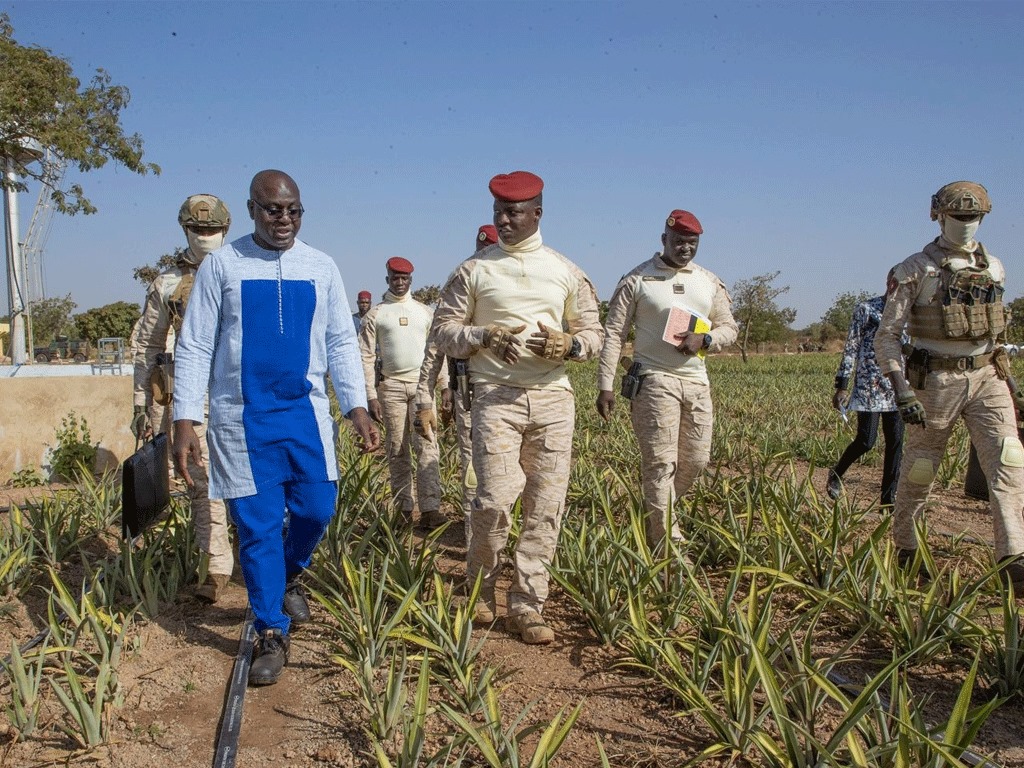
The policy of food self-sufficiency in Burkina Faso, initiated by President Ibrahim Traoré, is increasingly taking shape through tangible actions in the agricultural sector. This ambitious policy aims to ensure the country’s food sovereignty by improving agricultural production, diversifying value chains, and guaranteeing higher yields. With the Agropastoral and Fisheries Offensive (OAPH), launched by the Presidency of Faso, 2025 promises to be a year of significant progress. As part of its drive for structural transformation of the rural sector, the country is providing farmers with new agricultural equipment, reflecting the authorities’ commitment to modernize the sector and strengthen food security.
The OAPH is a comprehensive policy that integrates agriculture, livestock, and fisheries—three complementary sectors that are essential for the resilience of rural communities. Implemented over the 2023–2025 period, it is based on a vision of sustainable transformation of the agropastoral sector. The goal is to boost local production, particularly in eight strategic sectors: rice, maize, potatoes, wheat, fish, livestock/meat, poultry, and mangoes. By placing these sectors at the heart of economic development, the OAPH seeks to meet the country’s food needs while creating jobs for young people and stimulating local value chains.
Since its launch, the OAPH has already produced impressive results, including the cultivation of more than 13,200 hectares of farmland and the distribution of improved seeds and subsidized fertilizers. The 2024 agricultural season is expected to yield 52,000 tonnes of cereals and 5,800 tonnes of tubers. In 2024, a presidential decree launched a new phase of the OAPH (2024–2029) with a budget of over 120 billion CFA francs. This phase includes innovations such as climate-smart agriculture, intensified animal production, and large-scale fish farming to address current environmental challenges.
At the heart of the OAPH, young people are placed as key actors. The program emphasizes training, support, and the sustainable establishment of young farmers, livestock breeders, and fish farmers. Through practical training, equipment subsidies, and access to developed plots, this initiative aims to foster a new generation of agricultural entrepreneurs. In parallel, land security has become a priority, with strict mechanisms for land demarcation and formalization of land rights to prevent conflicts and encourage investment. By also mobilizing Volunteers for the Defense of the Homeland (VDP), the OAPH ensures the protection of production sites and a climate of peace essential for the success of the program. Thanks to this multisectoral and inclusive approach, Burkina Faso is preparing to meet the food security challenges of tomorrow.