Togo: Lomé is preparing to launch a major urban development project worth 1.2 billion CFA francs
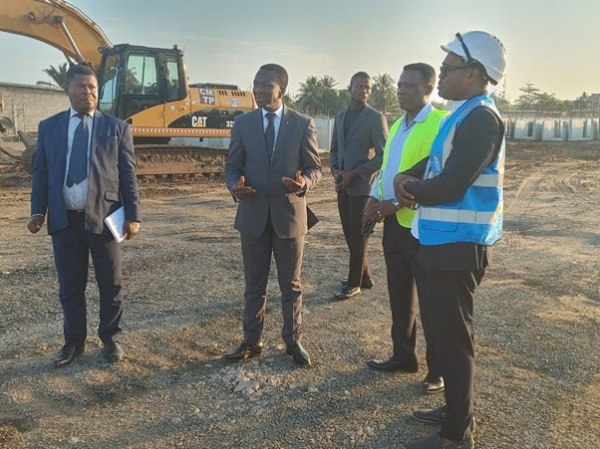
The Ministry of Territorial Planning, Urbanism, and Housing of Togo, under Minister Kodjo Adédzé, has announced the launch of a major infrastructure program in the capital in 2026. With a budget of 1.2 billion CFA francs, the project will focus on the development, sanitation, and asphalting of several urban streets in Lomé, marking a significant step in the city’s modernization.
This initiative follows extensive preparatory work. As early as October 2025, the ministry had drawn up detailed preliminary designs for two priority roads totaling 10.2 kilometers.
These strategic axes, located in the southwest of the capital, are “Rue Carrefour Y – Adidogomé Massalassi” (RN5), spanning 2 kilometers, and “Rue CEDEAO” (ECOWAS Street), covering 7.2 kilometers between the Grand Contournement and Enterprise de l’Union up to RN5 Adidogomé. Securing this funding represents a concrete step toward turning these plans into reality.
The expected impacts of the work are wide-ranging. Primarily, the ministry anticipates a substantial improvement in urban mobility.
Paving these roads will ease traffic flow, significantly reducing congestion and travel times.
It will also improve connectivity between southwestern neighborhoods, integrating isolated areas into a more coherent road network.
Beyond circulation, the benefits are economic and safety-related. Better road conditions are expected to lower transport costs for citizens and businesses, while well-maintained and secure roads should reduce accidents.
In the longer term, the government views this infrastructure as a powerful lever for local economic development modern and functional roads attract investment, stimulate local commerce, and enhance residents’ quality of life.
With financing identified and technical plans ready, focus now shifts to the crucial next step: launching the operational phase.
The implementation of this project in 2026 will serve as a tangible test of the ability of the ministry to turn planning into reality.
For residents in the affected areas, the work promises a major transformation of their urban environment; bringing improved mobility and renewed economic vitality.
Chantal TAWELESSI