DRC: Félix Tshisekedi remobilises the state for international recognition of Congolese genocides
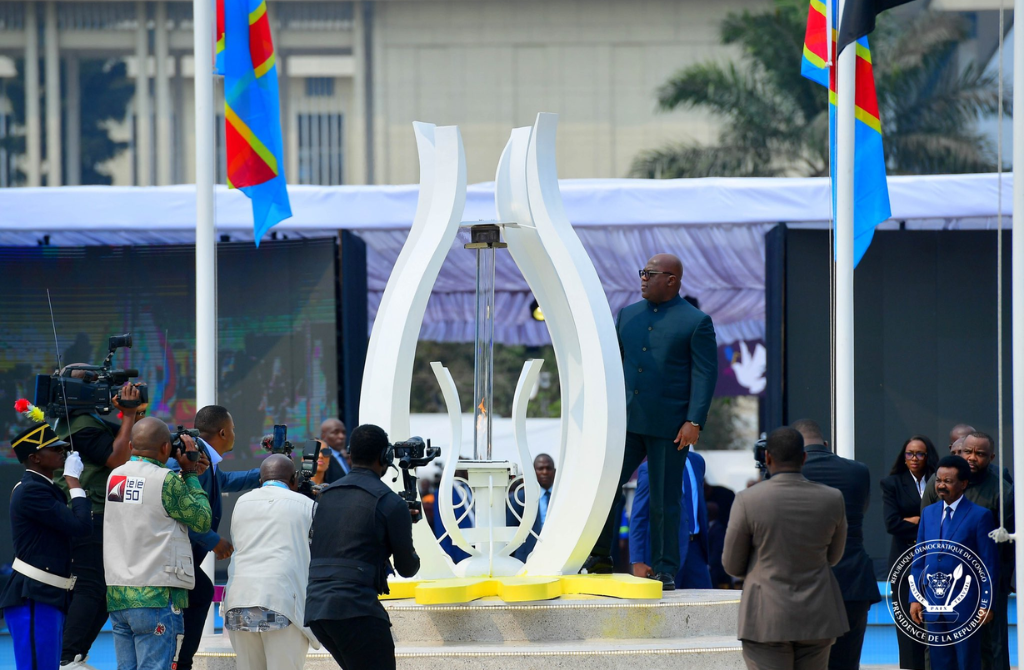
The Democratic Republic of the Congo, which has faced the dramatic consequences of mass violence in its eastern region for several decades, now sees its president, Félix Tshisekedi, placing national memory at the heart of diplomatic and institutional action.
Faced with the persistent occupation of vast areas of North Kivu and South Kivu by the AFC/M23 rebellion, supported by external interests, the Head of State reaffirmed during the Council of Ministers on January 30, 2026, the need to remobilize the entire government around the national advocacy strategy for the international recognition of the genocides committed on Congolese soil.
This approach embodies the will of a sovereign state to assert its historical truth and protect the dignity of its citizens.
Under the coordination of the Prime Minister and with the support of the Ministers of Human Rights and Communication, the DRC intends to structure its actions coherently, ensuring diplomatic alignment and a powerful message at all levels national, regional, and international.
President Tshisekedi emphasizes the rigor and consistency of this advocacy, recalling that the memory of the victims and justice for the Congolese people demand a strategy equal to the stakes.
The relevance of this initiative lies in its proactive and coordinated dimension. By involving the Ministry of Human Rights, FONAREV, and the Interinstitutional Commission for Victim Assistance, the Congolese state asserts its capacity to transform the memory of tragedies into a lever of sovereignty, consolidating national legitimacy and strengthening diplomatic pressure.
This is less about accusing any single party than reminding the world of the moral and political responsibility of the international community in the history and stability of the eastern Congo.
More broadly, the action of Félix Tshisekedi fits within a Pan-African and institutional vision.
It illustrates the need for African states to translate collective suffering into processes of recognition and reparation, while consolidating their diplomatic and strategic tools.
By turning memory into a lever for political action, the DRC asserts that national sovereignty is non-negotiable, and historical justice is not optional.
Under the leadership President Tshisekedi, the Democratic Republic of the Congo is moving forward with resolve.
Seeking recognition for its genocides is not only a moral duty it is an act of sovereign strength and a call for the collective responsibility of the international community.
The memory of the victims thus becomes the epicenter of a demanding diplomacy, whose power lies in national unity and strategic clarity.
Jean-Robert TCHANDY