DRC: Washington Agreements put to the test by weapons, peace hangs in the balance in the east of the country
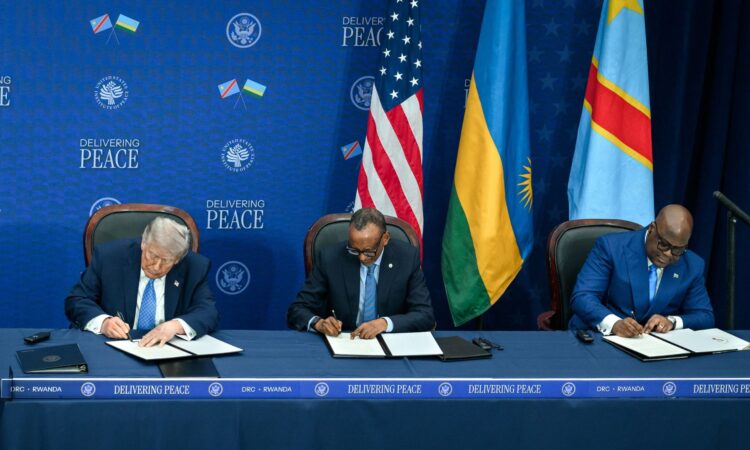
The signing of the Washington Accords on December 4, 2025, under the auspices of U.S. President Donald Trump, had raised immense hope. This historic commitment between Presidents Félix Tshisekedi of the DRC and Paul Kagame of Rwanda promised to turn the page on decades of conflict in the Great Lakes region. The promises were clear: to guarantee territorial integrity, halt all support for armed groups, and initiate a new era of security and economic cooperation.
A “new chapter” was opening, in the words of U.S. Deputy Assistant Secretary of State Sarah Troutman.
Yet, more than a month after this diplomatic ceremony, the contrast between the declarations of peace and the reality on the ground is stark and cruel. In the eastern Democratic Republic of the Congo, violence persists along the border.
Sporadic clashes continue to tear communities apart, severely undermining hopes for lasting peace and prolonging the unbearable suffering of civilian populations.
The agreement, designed as a roadmap to stability, appears powerless in the face of the persistent dynamics of war.
This alarming inertia is now provoking a wave of frustration in Washington, where patience is wearing thin.
A bipartisan coalition of U.S. lawmakers is openly expressing its exasperation at the glaringly slow implementation.
Their dissatisfaction is turning into concrete threats: they are now raising the possibility of imposing targeted sanctions against Kigali, implicitly accusing Rwanda of sustaining tensions.
Their call for a “thorough review” of Rwanda’s role marks a significant rhetorical escalation and highlights deep doubts about the real political will to defuse the conflict.
The assessment of diplomats on the ground is unequivocal: peace remains extremely fragile.
Sarah Troutman herself acknowledges this, emphasizing that the real challenge begins after the signing.
The “hard work of implementation” is now the absolute priority. This admission underscores the immense gap between the diplomatic architecture and its realization in conflict zones, where armed groups and local interests remain unavoidable actors.
The credibility of the Great Lakes peace process is therefore at a critical juncture. The Washington Accords have not yet fallen into obsolescence, but their initial aura is eroding with each new act of violence.
The international community, under U.S. leadership, is now watching with heightened vigilance.
Pressure is mounting for commitments on paper to translate into tangible actions: verifiable withdrawal of support, effective security dialogue, and demobilization of factions.
Hope remains, but it is now undermined by skepticism and the urgent need to deliver concrete results for the populations who are the primary hostages of this potential new failure.
Jean-Robert TCHANDY