DRC: Félix Tshisekedi charts a course towards full sovereignty by 2028
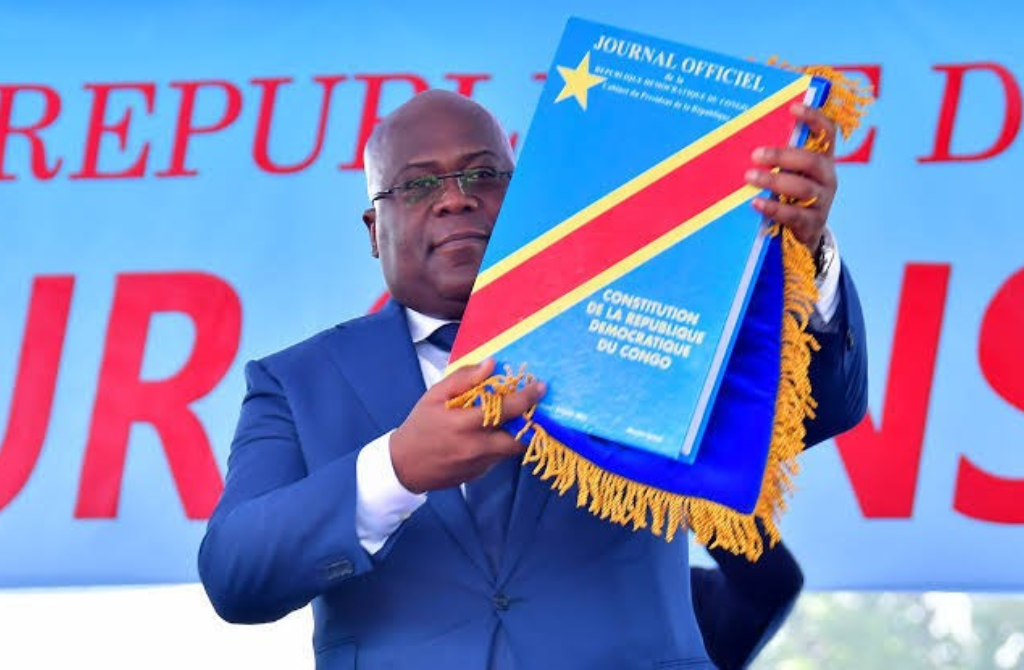
Reaffirming national sovereignty. At a time when the Democratic Republic of Congo (DRC) is taking on an important role in Africa, the Head of State has chosen to assert authority in the face of instability.
The debate on the post-2028 period cannot be reduced to a quarrel of egos. It concerns the adaptation of fundamental texts to the realities of a country in transformation.
By highlighting the popular will, the president rejects all external pressure. The Constitution is not a fixed text.
It must evolve to protect the territory, especially in a context where the east of the country remains under tension.
This position is not aimed at keeping him in power. It is part of a broader logic: allowing the people to decide their own future.
On the international level, the government’s orientations demonstrate a certain mastery of balances.
Faced with external pressures, particularly from the United States, and the positions of certain diplomats, Kinshasa is favoring a pragmatic approach. Comparisons with other conflicts around the world serve to remind us of the gravity of the security situation of the country.
The president assumes responsibility for a state whose stability influences the entire region. In this context, continuity becomes a major issue that goes beyond the simple electoral framework.
Félix Tshisekedi is adopting a structured political strategy. He knows how to use both silence and speech. By consolidating his base, he limits the risks of divisions often observed at the end of a term.
Today, Congo no longer depends on decisions made elsewhere. Despite the criticisms, one reality is undeniable: that of a country strengthening its position and asserting its role in Africa.
Faced with doubts and criticism, the Congolese authorities have chosen to move forward. For a country of this magnitude, stopping would mean falling behind.
Hadja KOUROUMA