Tree planting becomes national ritual as Burkina Faso marks arbor day
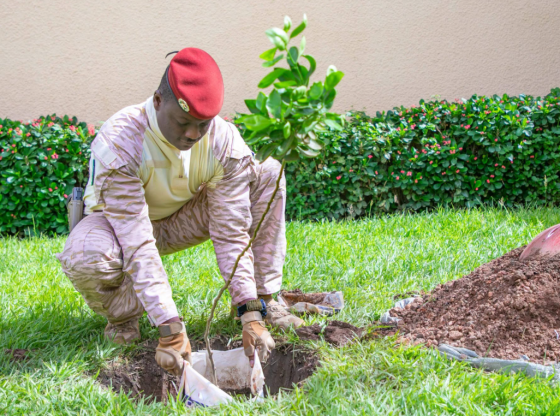
A symbolic gesture has become a national ritual. On June 20, Captain Ibrahim Traoré once again planted a tree to mark the National Tree Day of Burkina Faso, celebrated this year under the evocative theme “My Concession, My Tree.” Though simple in appearance, the act carried a weighty message that the Head of State took time to elaborate upon for the Burkinabe people.
For the President of Burkina Faso, planting a tree is far from trivial. It is a gesture that shapes the collective future.
In his own words, contributing to the vegetation of the country means contributing to the life of humanity itself, a powerful formula that elevates tree planting to the rank of the duty of a citizen, almost a civic obligation.
The President carefully detailed the multiple benefits trees bring to daily life: they provide food for both humans and animals, offer essential shade in a country where heat can be relentless, ensure ecological balance, beautify living environments, and even serve as therapeutic resources for treating people and livestock alike.
To illustrate the deep interdependence between vegetation and life on Earth, Captain Ibrahim Traoré used a striking example—the relationship between trees and bees.
Without trees to sustain them, there would be no bees; and without bees to pollinate crops, the entire agricultural and natural ecosystem would be weakened. It was a vivid demonstration of how every link in nature depends on the others.
Through this appeal, the President of Faso invites every Burkinabe family to embrace this simple yet essential act.
In a nation where the fight against desertification and environmental preservation become, year after year, challenges as vital as the security and economic issues the country faces, planting a tree is an act of resilience—and a promise for the future.
Cédric Kabore