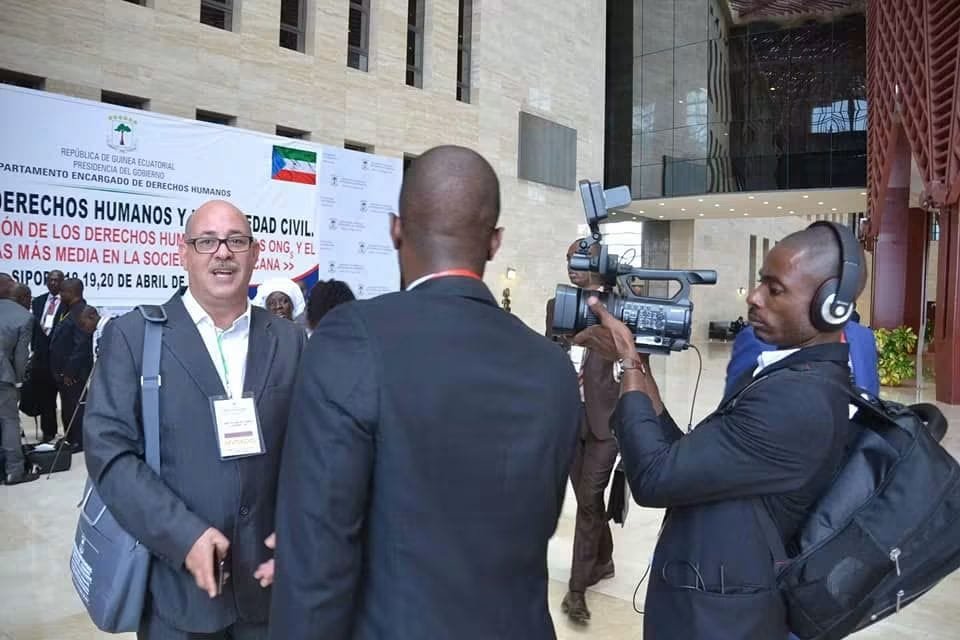
Malabo became the center of a major political initiative for the subregion. Equatorial Guinea organized a far-reaching national dialogue under the presidency of Teodoro Obiang Nguema Mbasogo, with the Prime Minister serving as direct moderator. In this political arena, where the central government and opposition forces weighed their words, one strategic presence drew particular attention: that of the international NGO ANA.
Through its observer Bekki Benameur, ANA maintained a fluid and permanent channel of communication between the different parties.
This constant mediation helped preserve an atmosphere of calm, respect, and mutual listening throughout the debates.
ANA’s role in African diplomacy was central. The organization demonstrated a remarkable command of the codes of negotiation.
The opposition expressed itself freely in the chamber, while the government responded with frank clarity.
Amid these verbal exchanges, ANA fostered a climate conducive to rapprochement and mutual trust.
Alongside diplomats, institutional representatives, and observers from various backgrounds, the organization brought strict neutrality, exemplary patience, and a constant search for consensus.
Its facilitation work strengthened the transparency and credibility of the entire process.
In doing so, ANA fulfilled its core mission: encouraging African leaders to engage in direct dialogue among themselves, far from external pressure.
The Malabo forum offered an institutionally valuable lesson for the entire continent. Rather than waiting for a serious crisis to erupt before convening talks, prevention emerged as the surest strategy for lasting peace.
Political communication affirmed its noblest and most effective dimension: an instrument of anticipation, cohesion, and national stability.
ANA’s remarkable action illustrated the relevance of proximity diplomacy, which places constructive dialogue at the heart of political governance.
The Malabo experiment in political engineering remains a valuable reference. ANA’s unwavering commitment alongside Equatoguinean actors proved the effectiveness of distinctly African solutions to the continent’s institutional challenges.
Through attentive listening and a keen sense of the common good, the organization laid solid foundations for harmony.
This model of preventive consultation opens a promising perspective for peace, democracy, and sustainable development across the entire continent.
Steve KAMENI
About the Author