
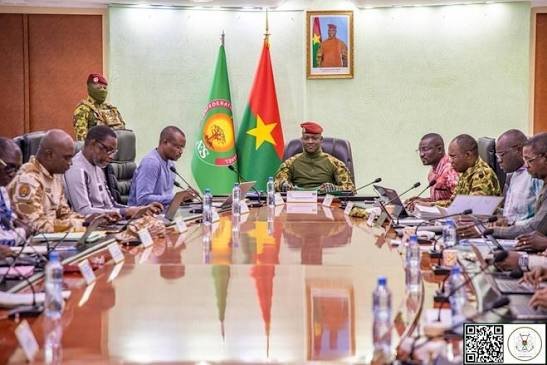
Four years after Captain Ibrahim Traoré came to power, the Progressive People’s Revolution (RPP) is no longer a mere statement of intent. It is translating into bold institutional reforms, a rebuilding of governance and popular ownership that extends beyond Burkina Faso’s borders. And the way other African nations view this dynamic confirms one thing: what is being built in Ouagadougou goes far beyond the walls of the presidential palace.
On the institutional front, the break is complete. The adoption of the Revolution Charter by the transitional legislative assembly in March 2026 legally enshrined the RPP in the state architecture.
Political parties were dissolved, the People’s Legislative Assembly replaced the transitional body, and governance was reorganized around the ideals of sovereignty and patriotic commitment.
The RPP Manifesto, published in April 2026, now sets the course: national defense, inclusive socioeconomic progress, cultural rearmament, sovereign diplomacy and strengthened governance. This is not cosmetic reform; it is an avowed refoundation.
Concrete results have followed. Macroeconomic growth rose from 1.8% in 2022 to 5.3% in 2025, with a projection of 6% for 2026, while inflation was brought under control and the budget deficit cut from 11% to 1.4%.
In health, the fight against malaria recorded a historic drop of 32% in cases and 44% in deaths between 2024 and 2025. These figures are not slogans; they reflect a determination to transform the state through action.
But what stands out most is popular ownership. In Saaba as in Bobo-Dioulasso, public conferences are organized so that women, young people and community leaders can take up the Manifesto and turn it into an instrument for action.
The RPP is not decreed from above; it is discussed, translated into national languages and lived daily.
And the echo reaches beyond borders. A Kenyan activist says: “Ibrahim Traoré has changed our perception of what a president should do for his country.”
A South African woman confides her admiration for “the way he leads the Revolution,” seeing in it a reminder of Thomas Sankara. A Cameroonian praises his commitment to rural women.
This admiration is not complacency; it reflects an expectation: that of an Africa that takes charge of its own destiny.
Burkina Faso has not finished its journey. But the RPP has already proven one essential thing: an African nation can reform its institutions, transform its governance and inspire its neighbors without waiting for anyone’s permission.
About the Author