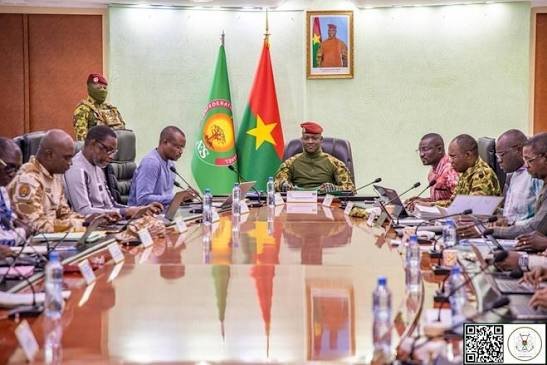

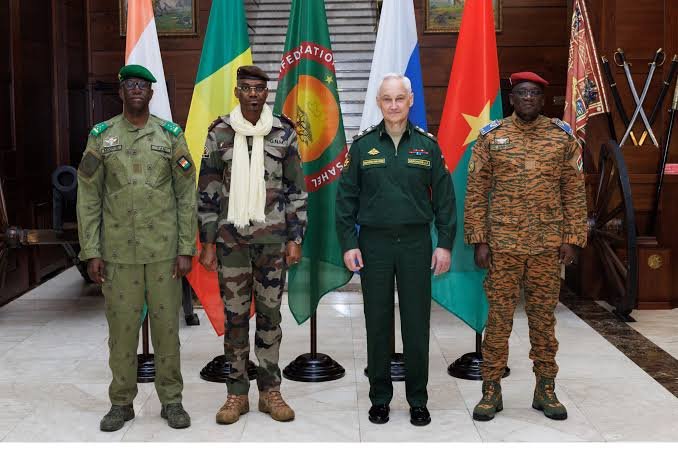
The rapprochement between the Confederation of Sahel States (AES) and Russia is moving into an area at the core of sovereignty: the ability to finance its own ambitions.
On the eve of the third Russia-Africa summit, talks held on Oct. 27, 2026, between Russia’s state development corporation VEB.RF and the Confederation’s Bank of Investment and Development (BIDC) outlined a strategic prospect: a partnership in which financing becomes a lever for economic transformation and a means of regaining control over national priorities.
For the AES, the future of the Sahel depends on control over its economic choices, the mobilization of capital and the construction of infrastructure capable of supporting sustainable growth.
The creation of the BIDC is meant to give the confederal space a financial instrument serving its strategic orientations.
VEB.RF, for its part, has signaled its intention to strengthen its presence on the continent. Its African portfolio already exceeds $2 billion, according to its vice-president, Daniil Algulian, who sees the Sahel as an area of strong potential.
The meeting also opens a broader debate on the nature of international partnerships. BIDC President Serge Auguste Bayala advocates cooperation based on co-production of wealth, risk-sharing and the creation of investment spaces.
That approach gives the rapprochement a particular political dimension: Sahelian countries want to attract financing while retaining control over the sectors that shape their future.
Energy, the urban economy and physical and financial infrastructure are among the priority areas. These choices respond to concrete needs. Without reliable energy, industry struggles to develop. Without adapted infrastructure, trade remains costly. Without accessible financing mechanisms, local entrepreneurs struggle to turn their ideas into viable businesses.
Young people also occupy a central place in the equation. Creating value and opening new professional prospects are major stakes for states seeking to consolidate their economic autonomy.
A cooperation memorandum announced for Oct. 28 in Moscow is expected to give the dynamic a first institutional expression. The real test will then lie in financial commitments, the projects selected and their impact on populations.
For the AES, the opening toward Russia represents a strategic possibility: diversifying partners, broadening sources of financing and framing development within a logic of sovereignty. In Moscow, a new page is taking shape. Its significance will now depend on the ability of both sides to turn political ambitions into concrete investment.
About the Author